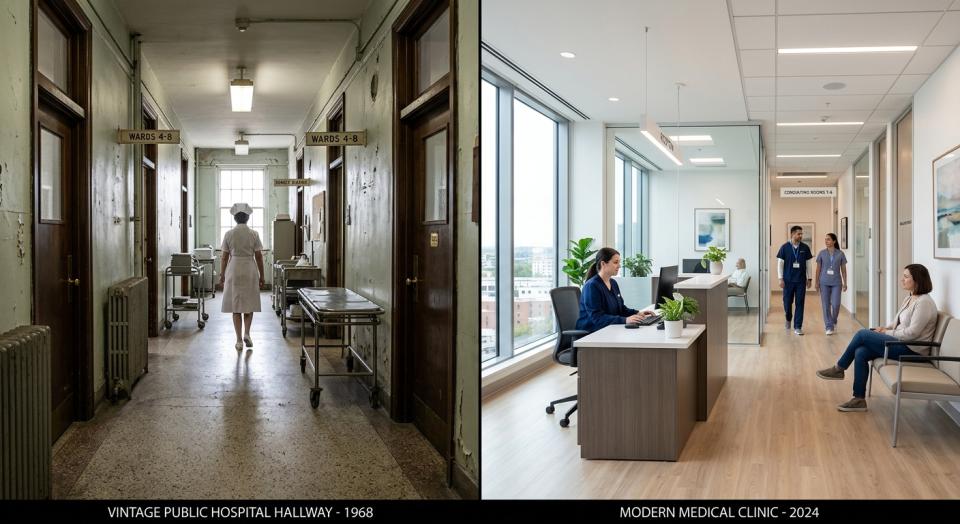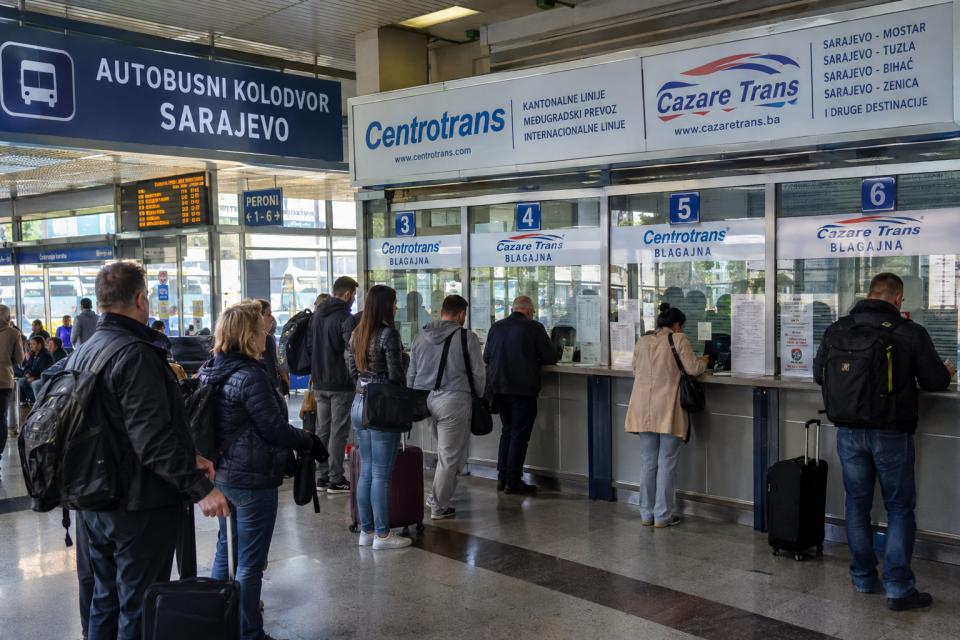

When the romance of moving to Sarajevo starts to fade around day five, you'll be sitting in some government office at 8 AM with a pile of documents, wondering why you need three copies of something translated into Bosnian that's already in English.
Welcome to Balkan bureaucracy. The good news: it's not as nightmarish as the internet makes it sound. The bad news: you need patience, the right documents, and occasionally a fixer who knows someone.
This is what nobody tells you when you arrive.
Making Sense of Banking in the City of Soul
Let's start with the most urgent practical problem: you need a bank account. Without one, your employer can't pay you, your landlord might get nervous, and you'll be that person trying to pay for coffee with cryptocurrency.
The Sarajevo banking system is straightforward once you understand the pattern. Major banks that welcome foreigners include Intesa Sanpaolo, UniCredit Bank, Privredna Banka Sarajevo, Sparkasse Bank, and Raiffeisen Bank.
Most expats I've spoken to drift toward either Raiffeisen Banka or UniCredit Bank because their English-speaking staff actually know how to help someone from Germany or Canada navigate the process without visible frustration.
Here's what you need to walk into any branch with:
Your passport is non-negotiable. Not a copy—the actual document. BH authorities want to see the real thing, scan it, photocopy it, and occasionally just stare at your face to confirm you exist.
Bring your residence permit or proof of address. If you've just arrived and haven't secured an apartment yet, a temporary address from an Airbnb or hotel works, but they'll need something official.
A utility bill, rental contract, or landlord letter is ideal. Some banks will request an employer letter confirming you work in Bosnia. If you're freelance or remote, they might ask for evidence of income, which could be your latest invoice or bank statement from your home country.
The process itself takes about 20 to 45 minutes if everything is in order. They'll assign you an account manager, set you up with online banking (which is genuinely solid), and hand you a debit card within five to ten working days. The card comes to your address, so make sure they have it right.
One thing that catches people off guard: banks here ask you to sign an NDA-type document confirming you're not financing terrorism or money laundering. It's standard anti-money laundering protocol across the EU, but it's worth understanding you're not being singled out. Everyone signs it.
The real trap most expats fall into is not understanding currency exchange. Bosnia uses the Bosnian Convertible Mark (BAM), which is pegged to the Euro at a fixed rate of 1.95583 BAM to 1 EUR. If you're sending money from abroad, use wise.com (formerly Transferwise) or similar services—they give you the real rate. Your bank will charge fees and give you a worse rate, sometimes up to 3-4% worse. Over a year, that's significant money.
Monthly maintenance is minimal. Most accounts run around 2 to 5 BAM per month (roughly 1 to 2.50 EUR), and if you maintain a minimum balance of around 100 to 500 BAM, they often waive it. ATM withdrawals are free at your bank's machines and cost about 1-2 BAM at other banks.
Getting Your Car Legal: The Document Tango
If you're shipping a vehicle or buying one locally, you need to register it. This process is where expats either thrive by staying organized or completely unravel.
First decision: are you importing a vehicle from abroad or buying locally? If importing, you need an international registration certificate (green card from your home country), your passport, and proof of ownership. The car must meet Euro 5 emission standards minimum. The car will require a technical inspection (tehničke provjere) at certified inspection centers throughout Sarajevo to confirm it meets Bosnian standards. This inspection costs around 50-100 BAM.
The registration process itself happens at the road safety agency (Agencija za bezbijednost saobraćaja). In Sarajevo, this is near the Ilidža area. You'll submit your inspection certificate, proof of insurance (which you must arrange before registration—see below), proof of payment of import taxes if applicable, and your ownership documents.
For import taxes, expect 15% customs duty on the vehicle's declared value (zero percent if you have EUR.1 paperwork proving EU origin) plus 17% VAT. The actual calculation depends on the official valuation database, not just your purchase price. The registration itself costs around 60-80 BAM and is valid for one year, after which you renew it annually.
Here's what trips people up: insurance in Bosnia is mandatory before you even apply for registration. You can't register without it. The minimum third-party liability insurance costs approximately 100 to 200 BAM per year depending on your vehicle type and driving history. Expect the process to take about 30 minutes at their office, and you'll walk out with a physical insurance card that you must carry at all times while driving.
Once you've registered the vehicle, you'll receive registration plates and a document called "Svedočanstvo o registraciji vozila" (vehicle registration certificate). Keep multiple copies. Traffic police here are relatively courteous, but they do check documentation, and having everything in order means you won't be that person on the side of the road translating bureaucratic documents while holding up traffic.
Annual taxes depend on your vehicle's emissions standard. A Euro 4 or newer car in the under-1500cc category costs about 150 BAM annually. Older or larger cars cost more. You pay this at the tax office (uprava poreza) or online through the government portal.
One practical note: driving licenses issued in EU countries are recognized in Bosnia. Non-EU licenses require an International Driving Permit (IDP) from your home country before you travel. If you plan to stay longer than a year, you can exchange your home license for a Bosnian one, which takes about a week and costs around 50 BAM. It's worth doing because it simplifies traffic stops and rental situations.
Healthcare: How to Stay Alive Without Bankrupting Yourself
Bosnia has a public healthcare system, and foreigners who work here are typically required to contribute. If you're employed locally, your employer handles this automatically through payroll deductions. If you're freelance or remote (which describes half of Sarajevo's expat population), you need to register yourself.
Health insurance contributions in Bosnia work differently than most Western countries. In the Federation of Bosnia and Herzegovina, you pay approximately 12.5% for health insurance plus 17% for pension/disability insurance, plus 1.5% for unemployment—totaling around 31% of your gross income. If you're self-employed, you pay the full amount yourself.
For someone earning 1,500 EUR per month, you're looking at roughly 465 EUR in total social contributions monthly. It's not cheap, but it covers everything: doctor visits, prescription medications, specialist appointments, and hospital stays.
Note: rates differ slightly in Republika Srpska.
To register, you need to go to the Health Insurance Fund (Fond zdravstvenog osiguranja) with your employment contract or proof of income, proof of residence, and your identification documents. The process takes about 30 minutes, and your coverage typically starts the month you apply.
The public healthcare system in Sarajevo is respectable but not luxurious. Doctors speak English reasonably well in major hospitals and clinics. Wait times can range from a few minutes to several hours depending on the facility and time of day. The most significant complaint from expats isn't quality—it's speed and administrative processes that still operate like it's the 1990s. Prescriptions require a doctor's signature and cost a small amount out of pocket (usually 3 to 10 BAM per medication).
Many expats, especially digital nomads earning Western salaries, opt for private health insurance instead. Companies like EXPA and American Expat Center offer expat-specific plans ranging from 30 to 100 EUR monthly, depending on coverage level. These give you access to private clinics, English-speaking doctors, and faster appointment scheduling. Private clinics like Privat Klinika Sarajevo and Medicana Sarajevo are excellent but cost significantly more per visit than public healthcare.
For emergencies, dial 124 for an ambulance. This number works in all of Bosnia, and ambulance services are free or extremely cheap (under 50 BAM) regardless of citizenship. Emergency rooms at major hospitals like Koševo and Klinički centar don't turn away patients based on insurance status.
One thing often overlooked: you need to register your residence address with the authorities. This seems administrative, but it affects your access to services. Within 15 days of arriving in Sarajevo, you should register at the local police station (Policijska stanica) with your passport and proof of residence. Landlords usually have a form for this. It takes 15 minutes and costs nothing. Without it, some services might refuse you.
The Reality Check: What Expats Actually Wish They'd Known
I've talked to dozens of expats in Sarajevo, and the common thread isn't that bureaucracy is impossible—it's that information is scattered and inconsistent. One person's experience at a particular bank branch might differ completely from another person's at the same branch depending on which employee helped them.
Keep everything in duplicate: documents, receipts, registration certificates, insurance papers. Bosnian bureaucracy loves paper. Also, don't rely on government websites for current information. Call ahead or visit in person because procedures change, and the website won't update for three months.
A practical hack many use: hire a local fixer for the complicated stuff. Companies like LongStay and Nomad Relocation specifically help expats with registration and documentation for around 50 to 100 EUR. It sounds expensive until you factor in your hourly rate and the frustration of dealing with multiple offices in a language you don't speak.
Finally, embrace the waiting. Get comfortable in those government offices. Bring a book. Talk to other people sitting there. Half the useful information you'll get won't come from official sources—it'll come from someone in the next chair who's been here two years longer than you.
Important Disclaimer
The information provided in this article is based on current regulations as of August 2026 and has been sourced from official institutions including the Central Bank of Bosnia and Herzegovina (Centralna banka Bosne i Hercegovine), the Indirect Taxation Authority (Uprava indirektnih poreza), official government websites, and interviews with local expat communities. However, legislation in Bosnia and Herzegovina changes regularly, and procedures, fees, and requirements can be updated without immediate public notice.
Additionally, regulations differ between the Federation of Bosnia and Herzegovina (FBiH) and Republika Srpska (RS), and these differences can affect banking procedures, healthcare contributions, vehicle registration processes, and documentation requirements. What applies in Sarajevo may differ in Banja Luka or other regions.
Before undertaking any of these procedures—opening a bank account, registering a vehicle, or accessing healthcare—we strongly recommend that you:
Verify all current requirements directly with the relevant institutions (your local bank branch, road safety agency, health insurance fund, or police station). Contact your country's embassy or consulate in Sarajevo for specific guidance related to your citizenship. Consult with local professionals or relocation services who have up-to-date knowledge of current procedures. Allow extra time for procedures as timelines can vary significantly.
This article is intended as a general guide based on typical expat experiences and should not be considered legal or financial advice. The authors and BalkanInsider are not responsible for any inaccuracies, changes in procedures, or outcomes resulting from following this information. Always verify details locally before taking action.