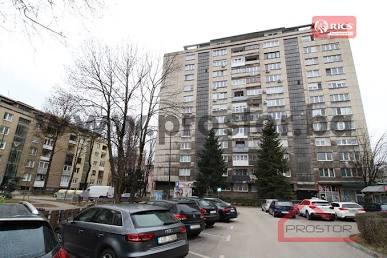

A notary in Sarajevo told me she processes roughly one foreign buyer's contract a week now, up from maybe one a month three years ago. Germans buying weekend apartments near the Vijećnica. Serbians and Croatians moving capital across the border. A retired Dutch couple who wanted a house with a view of Trebević and got it for less than the price of a garage in Amsterdam.
None of them ran into legal trouble. But all of them had to clear one hurdle first, and it is not the one most people expect. It is not visas, it is not residence permits, it is reciprocity.
Reciprocity is the gatekeeper, not citizenship.
Bosnia and Herzegovina does not have a blanket rule that says "foreigners can" or "foreigners cannot" buy real estate. Instead, under Article 15 of the Federation's Law on Real Rights, a foreign national can acquire ownership of property in BiH only if their home country grants the same right to BiH citizens. This is checked against a consolidated list maintained by the Federal Ministry of Justice, updated periodically and standing at 59 countries as of 18 May 2026.
Germany, Austria and Switzerland have long-standing, explicitly confirmed reciprocity with BiH, meaning citizens of those three countries buy under the same conditions as locals. Beyond that core group, several BiH-based real estate advisors report the list extends to EU member states generally, along with the US, UK, Turkey, and a handful of Gulf states. If your country isn't in that core confirmed group, the only reliable move is asking a BiH notary or lawyer to check your specific nationality against the current list before you sign anything, since the register is amended supplement by supplement and going stale between updates is common.
Republika Srpska runs on the same reciprocity logic under its own Law on Real Rights, with one notable difference: in RS, foreign nationals can own agricultural land without restriction as long as reciprocity applies, while in the Federation and Brčko District, foreigners generally cannot own arable land except through inheritance. If a listing includes farmland or an orchard, which is common outside the cities, that distinction changes what you're legally allowed to close on.
What the actual purchase process looks like.
Once reciprocity is confirmed, buying property in BiH follows a fairly standard continental European path, but with some local specifics worth knowing before you're standing in a notary's office.
First comes due diligence: pulling the land registry (zemljišna knjiga) extract and cadastre record for the specific parcel or unit, checking for mortgages, liens, unresolved inheritance claims, or boundary disputes. This step matters more here than in most EU markets, since land registry records in parts of BiH are still being reconciled after decades of gaps, and a title that looks clean on paper can have an unregistered claim attached to it. This is exactly where the bureaucratic groundwork you'll already be doing to relocate overlaps with buying property, and it's worth reading our guide to opening a bank account and clearing the rest of the paperwork before you start house-hunting, since you'll need a local bank account open regardless.
Next, the buyer and seller sign a purchase contract, which by law must go through a notary. Notarization isn't optional paperwork here, it's what makes the contract enforceable and registrable. According to one BiH property tax calculator, notary fees in the Federation follow a fixed tariff, running around 320 KM for a property valued at 100,000 KM and around 380 KM for one valued at 300,000 KM. Republika Srpska charges more because it uses a points-based system with VAT added, working out to roughly 439 KM at the 100,000 KM mark and 702 KM at 300,000 KM.
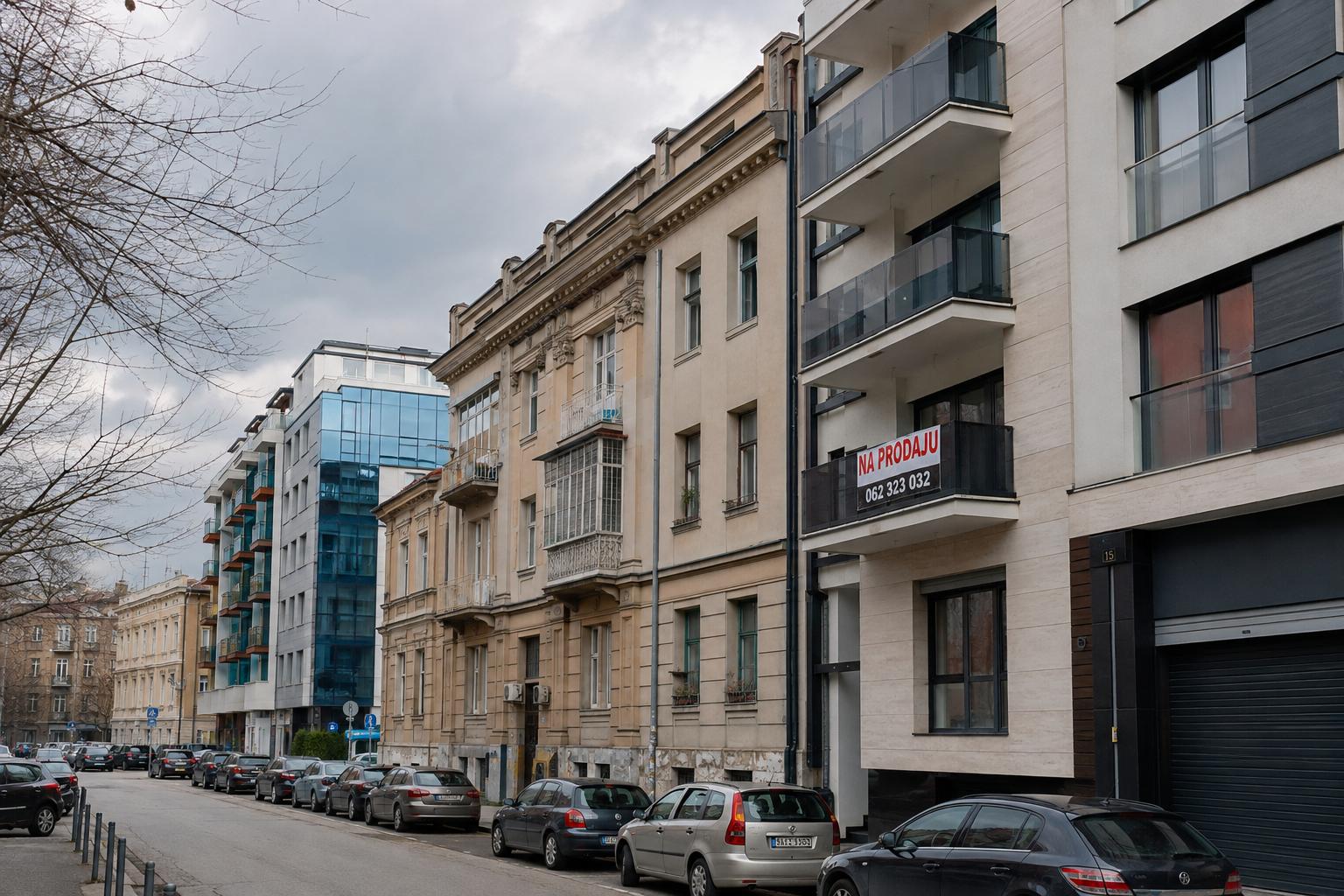
After notarization comes the tax filing, and this is where FBiH and RS genuinely diverge. In the Federation, the standard property transfer tax is 5% of the assessed market value. In Sarajevo Canton specifically, the buyer has been the one legally responsible for paying it since a 2019 law change, whereas in every other FBiH canton the seller pays by default unless the contract states otherwise. Republika Srpska doesn't run a classic 5% transfer tax at all; instead, it taxes the seller's capital gain, the difference between the original purchase price and the resale price, at a flat 10%, which is a different mechanism with different implications depending on which side of the deal you're on. If you're buying new-build directly from a developer, one more wrinkle applies: VAT at 17% is charged only on the first sale of a newly constructed property, and does not apply when you're buying from a previous private owner.
Once tax is paid and the notary has stamped everything, the final step is registering the transfer of ownership at the municipal cadastre office, which is what actually makes you the legal owner on paper. Until that's done, you don't own the apartment no matter how much money changed hands.
What you'll actually pay for the property itself.
Prices have moved fast, and if your information is more than a year old, throw it out and start over. The average price for a newly built apartment in Sarajevo hit 4,226 KM per square meter in the first quarter of 2026, up from 4,131 KM per square meter at the end of 2025. That's not a citywide flat rate though. Looking at realized 2025 transactions rather than asking prices, Stari Grad averaged 4,550 KM/m², Novo Sarajevo 4,350 KM/m², Centar 4,220 KM/m², Ilidža 3,610 KM/m², Novi Grad 3,490 KM/m², and Vogošća 3,270 KM/m², with the gap between the cheapest and priciest municipality running over 1,200 KM per square meter. Separately, an analysis of active listings on OLX from March 2026 put the citywide median asking price at 5,302 KM/m², which is asking price rather than realized sale price and tends to run higher, so don't be alarmed if the two figures don't match; they're measuring different things.
Zoom out to the national level and the average new apartment across all of BiH cost 3,701 KM per square meter in early 2026, a 20.4% jump year on year. Banja Luka has closed the gap with Sarajevo fast enough that some 2026 reporting puts it ahead in per-square-meter terms rather than behind, which would have sounded absurd five years ago. If you're weighing Sarajevo against Banja Luka or Mostar for where to actually put your money, our financial map comparing cost of living across the three cities is a useful companion read, and if Banja Luka specifically is on your list, we've also covered what it's like settling in there day to day.
None of this includes mortgage financing, and that's deliberate: local banks' appetite for lending to non-resident foreign buyers varies enough by institution and case that I'm not going to hand you a generic number. If financing matters to your plan, that's a conversation to have with a specific BiH bank before you fall in love with a listing, not something to assume from a blog post.
All prices, tax rates, and figures are current as of the sources' publication dates in 2026. Reciprocity status, tax obligations, and fee schedules change; confirm your specific case with a licensed BiH notary or lawyer before relying on any figure here.