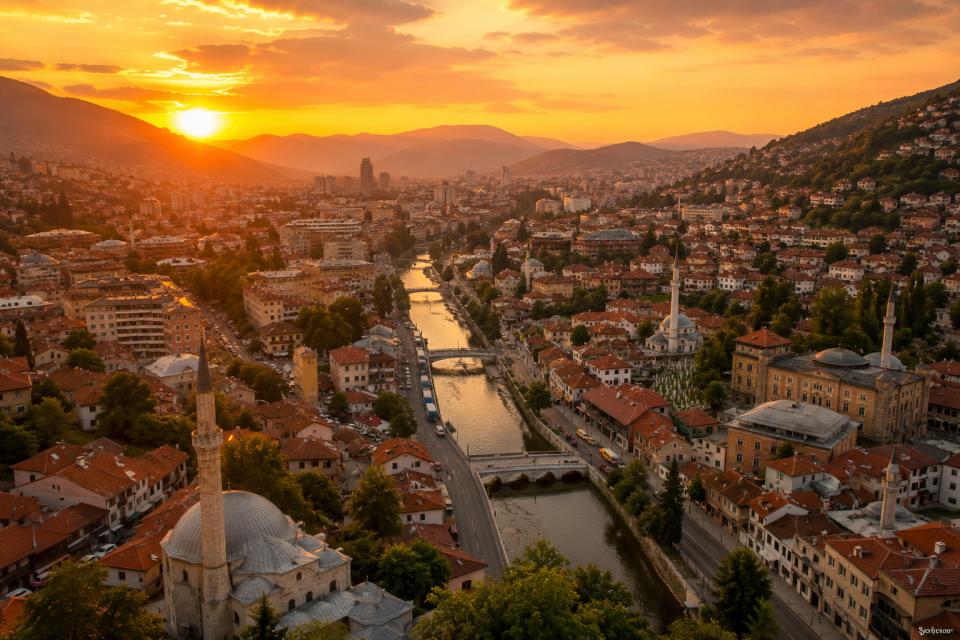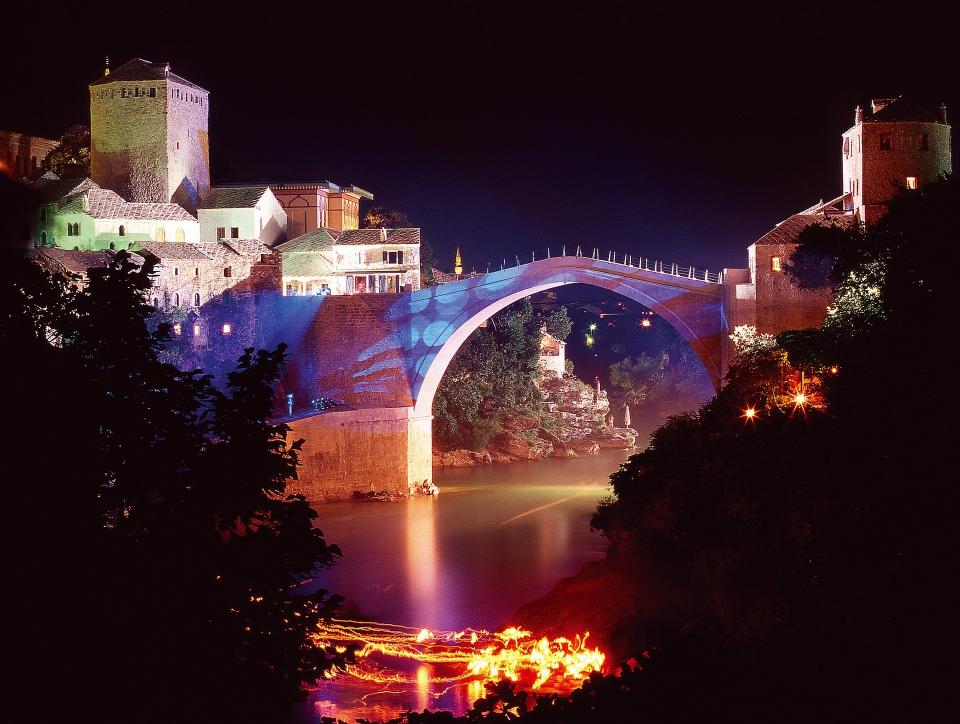

While travelers flock in droves to Dubrovnik’s ancient stone walls or squeeze through the narrow, cruise-ship-packed alleys of Kotor, just an hour's drive inland lies one of the peninsula’s best-kept secrets: Trebinje. Nestled in the southernmost pocket of Bosnia and Herzegovina, this sun-drenched gem offers Mediterranean warmth, Ottoman heritage, and an authentic, slow-paced lifestyle without the overwhelming tourist crowds or inflated coastal prices.
The Mediterranean Vibe in the Heart of Karst Country
Trebinje strikes a rare geographical balance. It feels strikingly like a coastal Riviera town—complete with massive, century-old Austrian plane trees (Platani) shading expansive open-air cafés—yet sits sheltered inside a ring of dramatic, rugged karst mountains.
Boasting over 260 sunny days a year, the climate shapes the daily rhythm. Life here moves around the ritual of the long espresso, morning trips to the open-air market, and the traditional evening đir—a slow, social stroll through the town square as the sun sets behind Crkvina Hill.
Uncovering Centuries of Layered History
Walking through Trebinje feels like tracing the borderland history of the Balkans, where Venetian, Ottoman, and Austro-Hungarian influences meet naturally along the banks of the emerald Trebišnjica River.
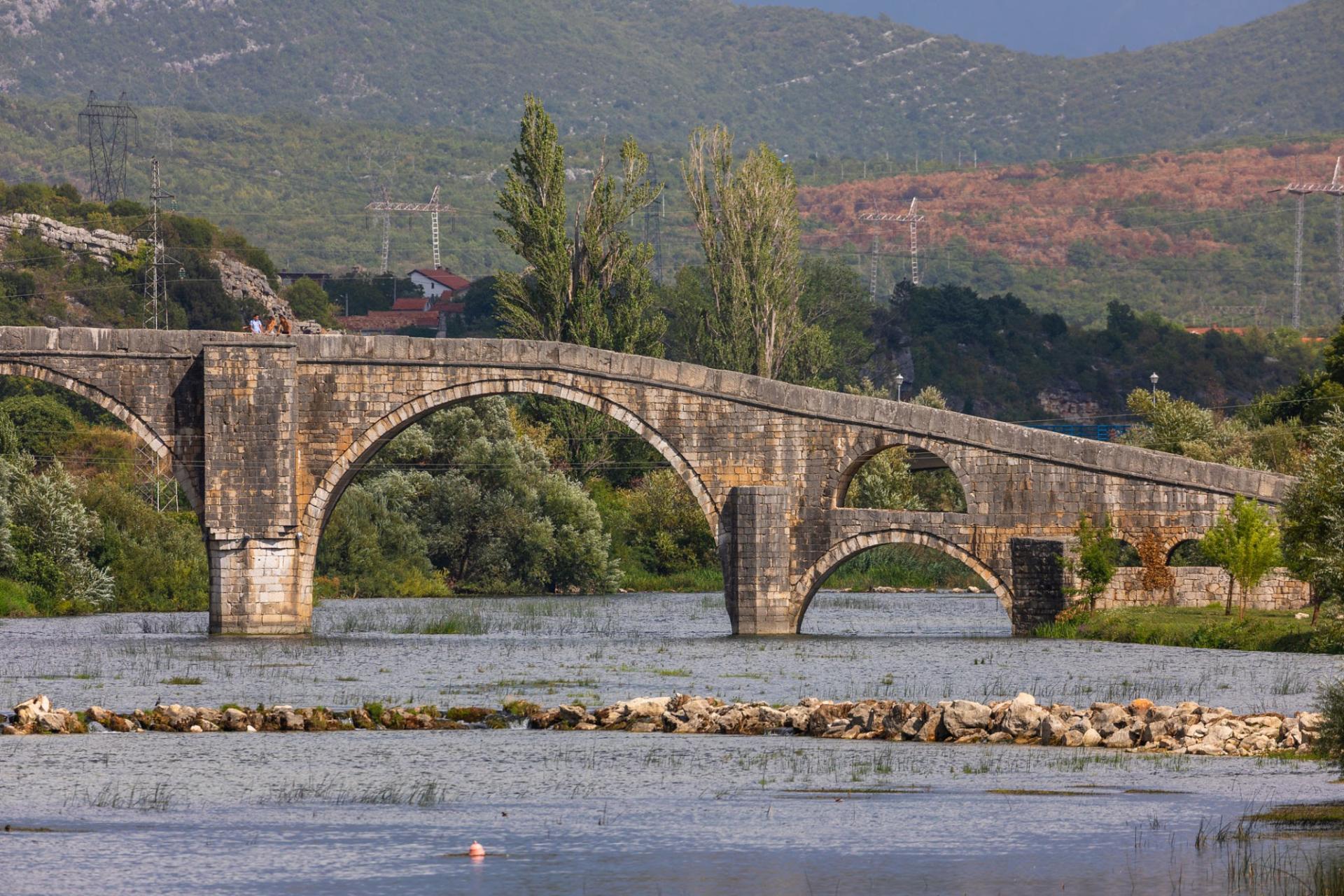 16th-century Arslanagića Bridge crossing the Trebišnjica. Source: raagoon / Getty Images
The Old Town (Kastel): Built on the right bank of the river in the 18th century by the Ottomans, this walled fortress district is packed with narrow stone lanes, small courtyard cafés, and residential homes built from local limestone.
Arslanagića Bridge: Commissioned by Mehmed Paša Sokolović in 1574, this stunning stone bridge with its asymmetric double arches rivals Mostar’s famous structure in architectural elegance, but allows you to enjoy it in complete quiet.
Hercegovačka Gračanica: Perched high above the city on Crkvina Hill, this Orthodox monastery complex was constructed as a complex copy of the Gračanica Monastery in Kosovo. Beyond its vibrant frescoes, it delivers sweeping 360-degree views across the entire valley.
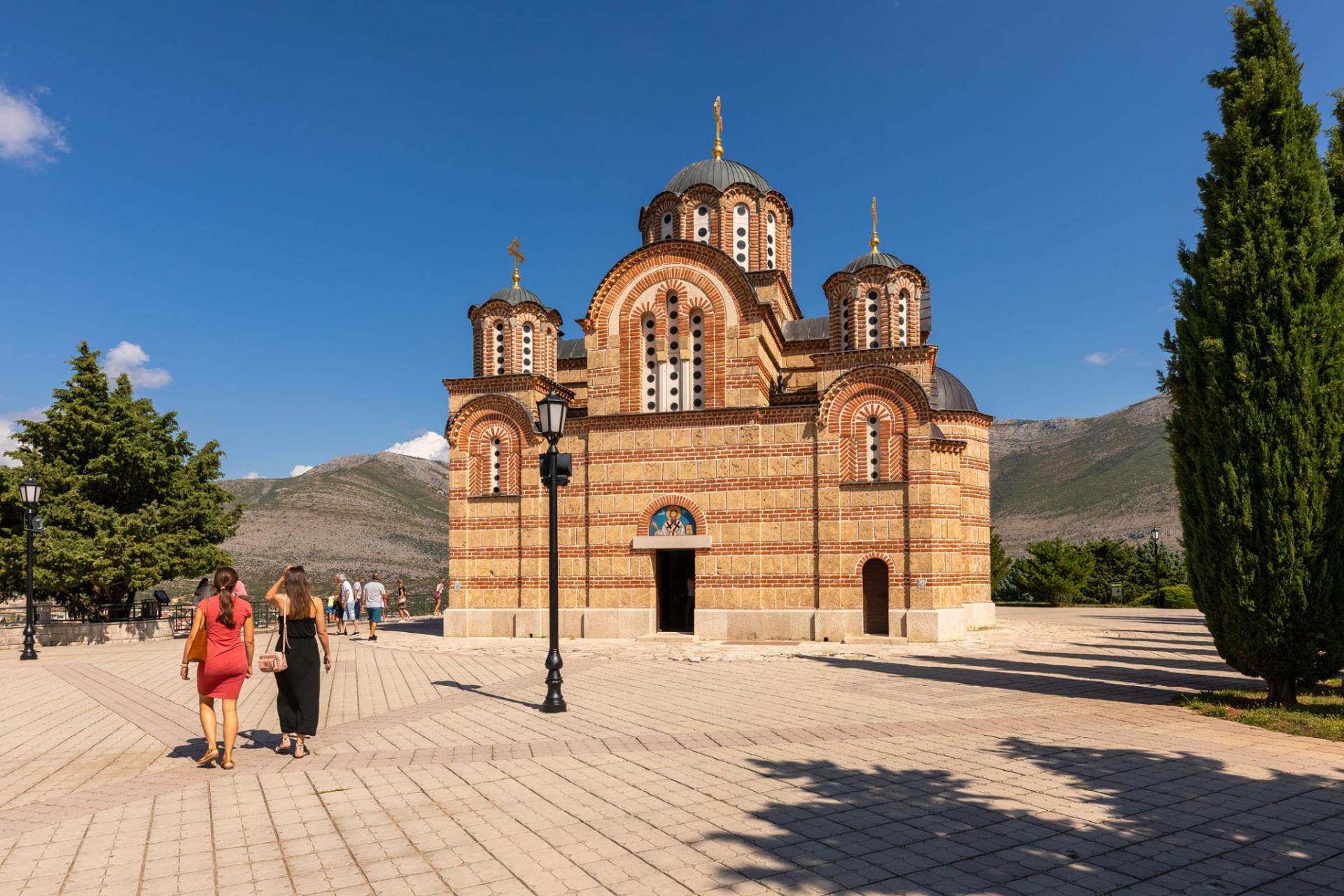 Hercegovačka Gračanica overlooking the valley. Source: raagoon / Getty Images
Culinary Traditions: Terroir of Sun and Stone
Herzegovina is world-renowned for its distinct microclimate, where intense summer heat and mineral-rich limestone soil produce bold flavors.
Indigenous Wine Varieties: Trebinje is the heart of Eastern Herzegovina's wine route. Sample Žilavka, a crisp, aromatic white wine with herbal undertones, and Vranac, a deep, full-bodied red packed with wild berry and spice notes.
Tvrdoš Monastery Cellars: Located just 4 km outside town, 15th-century monks still craft world-class wines in stone cellars that date back to the 16th century.
Highland Gastronomy: Sit under the shade at Trg Platana (Plane Trees Square) and order fresh cured prosciutto, local honey infused with mountain herbs, and sir iz mješine—an authentic Herzegovina specialty cheese aged inside sheepskin.
Traveler Planning Guide
Best Time to Visit May–June or September–October (perfect warm weather, active wine harvest)
Ideal Stay Duration 2–3 Days (ideal base for day trips to Dubrovnik, Mostar, or Kotor)
Getting There 45 min drive from Dubrovnik Airport (DBV); 1 hr drive from Kotor, Montenegro
Insider Active Tip Rent a bicycle and ride along the converted Ćiro railway line, a scenic trail following the old narrow-gauge train path through countryside vineyards.