 While Sarajevo captivates with its metropolis soul and Mostar enchants with its iconic bridge, heading into the lush, mountainous heartland of Central Bosnia reveals a town unlike anywhere else on the continent. Jajce is a place of rare fairytale drama—a medieval royal capital built around a roaring 22-meter waterfall that crashes down directly in the center of town.
Where the emerald Pliva River meets the rushing Vrbas, Jajce stands as an open-air museum of Bosnian kings, Ottoman governors, and World War II revolutionaries, all framed by dense alpine forests and pristine mountain lakes.
The Fortress City of the Last Bosnian King
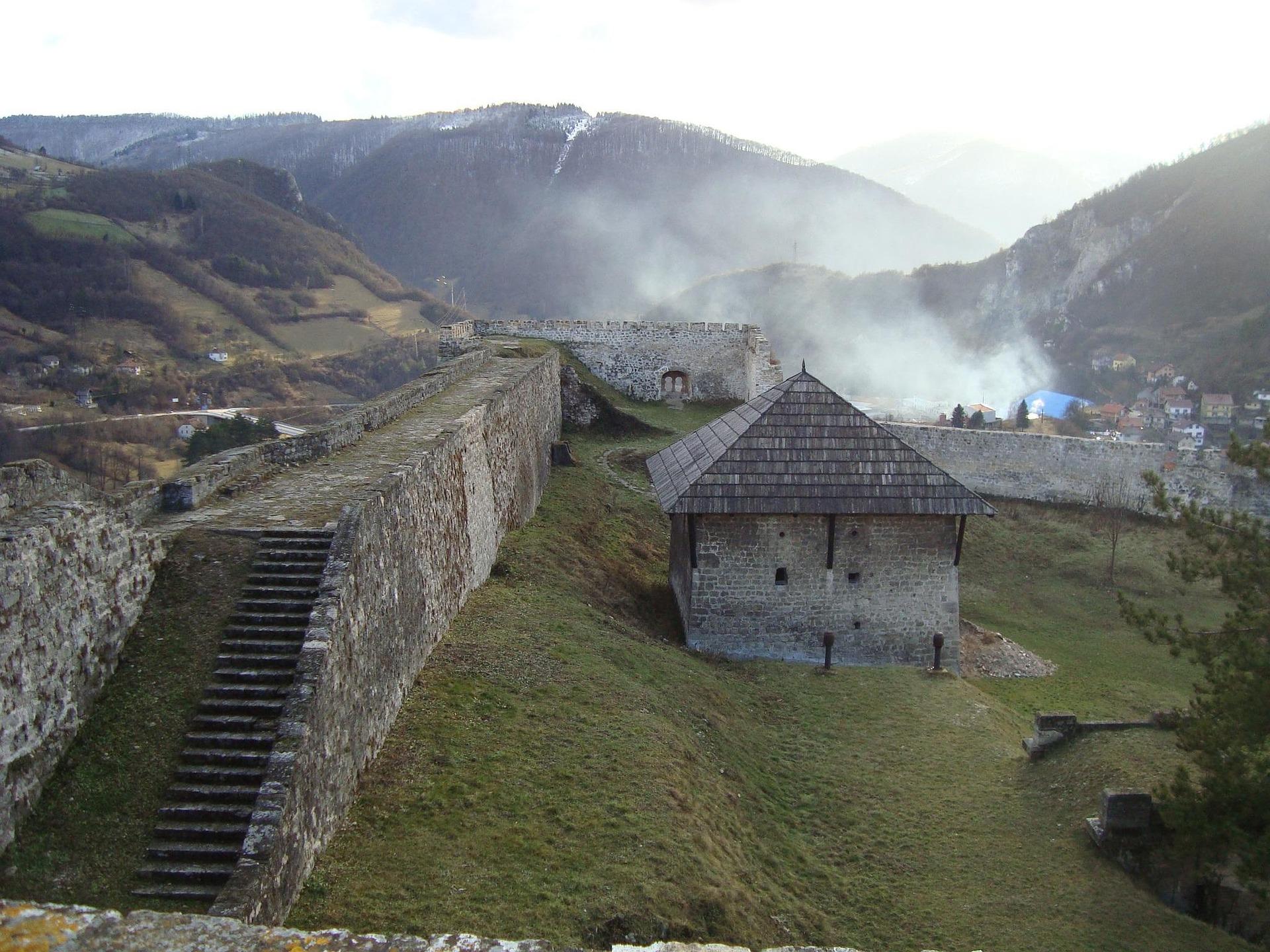
Approaching Jajce feels like stepping straight onto the set of a historical epic. Rising dramatically above the mist of the crashing Pliva Waterfall is an amphitheater of stone houses, minarets, and ancient defensive ramparts, all crowned by the 14th-century Jajce Citadel.Built by Duke Hrvoje Vukčić Hrvatinić, this fortress served as the royal seat for King Stjepan Tomašević—the last sovereign of medieval Bosnia, who was crowned here before the Ottoman conquest of 1463. Walking along its weathered stone parapets rewards travelers with sweeping panoramas over the surrounding river valleys.
Carved directly into the solid rock beneath the fortress lies an unexpected subterranean world: a 15th-century underground catacomb complex featuring a stone altar and royal heraldry, originally intended as a crypt for the founding noble family. Just steps away, St. Luke's Bell Tower stands as a testament to the region's complex spiritual history, representing a rare medieval Catholic bell tower preserved alongside Ottoman architecture.
Pliva Lakes and the Wooden Watermills
Just five kilometers upstream from the town center lies the serene oasis of the Great and Little Pliva Lakes (*Plivska Jezera*). Lined with wooden boardwalks and surrounded by steep forest, these crystal-clear waters offer a quiet sanctuary for kayaking, swimming, and slow afternoon walks.Tucked between the upper and lower lakes is one of Bosnia's most charming cultural treasures: the *Mlinčići*. This cluster of twenty miniature, oak-timber watermills was constructed by local farmers during the Ottoman era to grind wheat into flour using the river's natural current. Connected by narrow footbridges over bubbling streams, the mills look remarkably like something crafted for a mythical woodland village.
A Crossroads of Modern History
Jajce's historical weight extends far beyond the Middle Ages. On November 29, 1943, during the height of World War II, delegates from across occupied Yugoslavia gathered secretly in Jajce for the second session of AVNOJ, the Anti-Fascist Council for the National Liberation of Yugoslavia.Led by Josip Broz Tito, this summit laid the political and legal foundations for the post-war Yugoslav state. Today, the AVNOJ Museum near the city center preserves the original assembly hall, giving history enthusiasts a fascinating look into a crucial turning point in 20th-century European politics.
Central Bosnian Flavors: Trout, Cream, and Savory Pies
Gastronomy in Jajce blends heart-warming mountain food with traditional Bosnian culinary heritage.
Thanks to the cold, oxygen-rich waters running through the area, Jajce is renowned for fresh river trout (*pastrmka*), typically grilled over open coals with garlic, wild parsley, and olive oil. Mornings here often start with fresh *somun* flatbread slathered with thick, rich *kajmak* (clotted cream) sourced from neighboring mountain farms.
For those willing to take a quick 30-minute drive down the road to nearby Travnik, you will find what many locals consider the finest *ćevapi* in the entire country—extra juicy beef sausages served in soft, broth-soaked bread.
The Essential Traveler's Notebook
The ideal time to visit Jajce is between May and October, when the countryside turns brilliant green, lake temperatures rise for swimming, and outdoor cafes spill onto the cobblestone streets.Located roughly two and a half hours by car from Sarajevo, Jajce serves as a perfect two-day getaway or an unmissable highlight on a broader road trip through Central Bosnia toward Una National Park. Even in midsummer, remember to bring a light sweater—the spray from the Pliva Waterfall creates a cool, refreshing microclimate right in the middle of town.