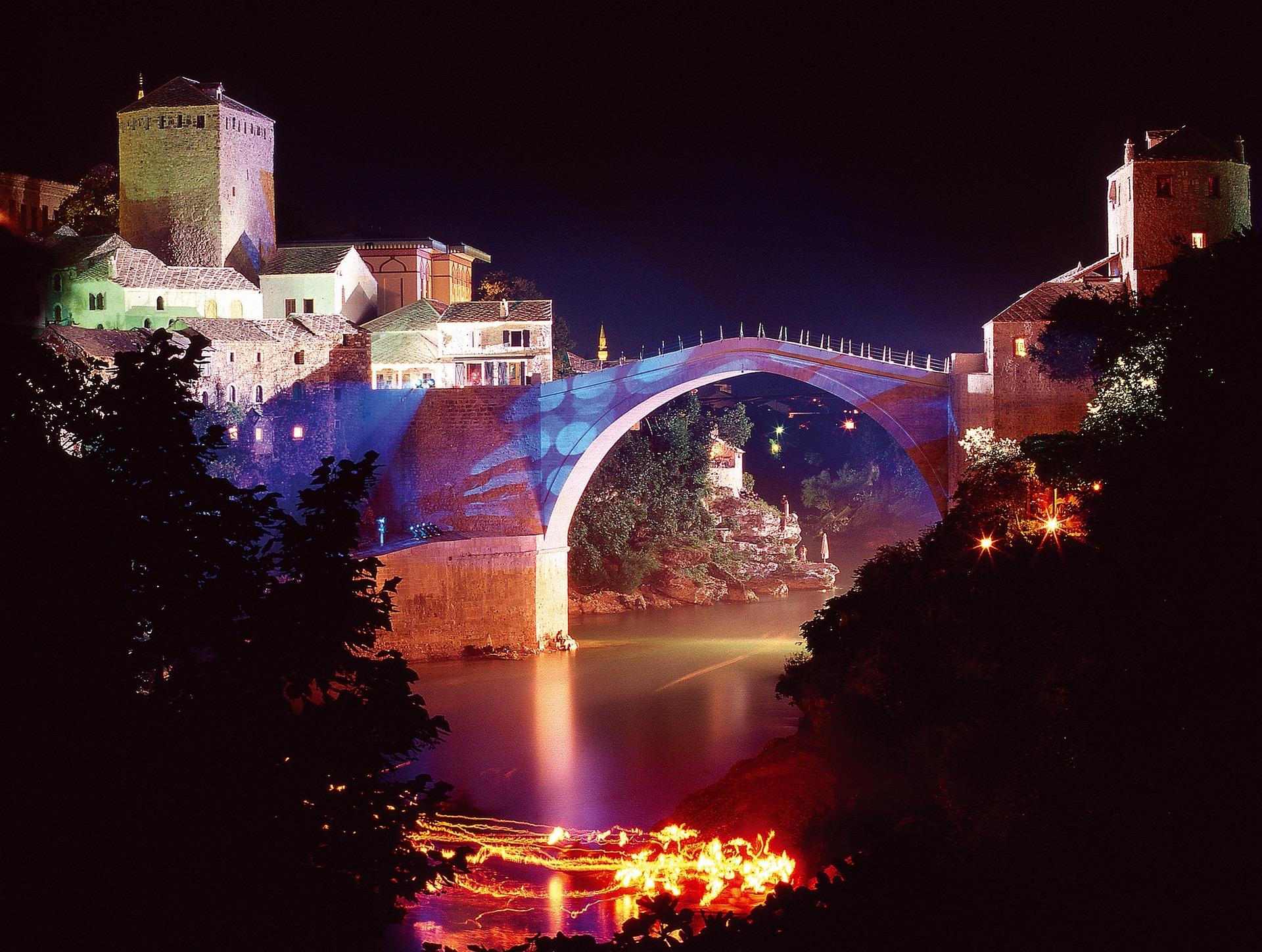

Travelers often hear about Mostar long before they set foot in it, usually through a single, breathtaking image: a pale stone arch leaping effortlessly over an impossibly turquoise river. Yet standing on the slick, sun-smoothed cobblestones of the Old Town—listening to the call to prayer echo off limestone cliffs while the icy Neretva rushes beneath—reveals that Herzegovina's cultural heart is far more than a staged postcard. It is a living city defined by water, stone, and a quiet, enduring capacity for rebirth.
Named after the mostari—the medieval bridge keepers who once guarded its strategic river crossings—Mostar has spent centuries operating as a borderland. Here, Mediterranean sunshine meets the dramatic karst topography of the Balkans, and Ottoman traditions remain seamlessly woven into the rhythm of daily urban life.
The Arch That Rebuilt a City
To understand Mostar, you have to begin at Stari Most. Originally commissioned by Sultan Suleiman the Magnificent in 1557 and designed by the Ottoman master architect Mimar Hayruddin, the single-span stone bridge stood for over four centuries as a world-renowned engineering marvel before its tragic destruction during the Bosnian War in 1993. Its painstaking reconstruction, completed in 2004 using centuries-old Ottoman quarrying techniques and stone salvaged directly from the riverbed, stands today as an international symbol of resilience and human reconciliation.
Watching the famous Ikaresi—the local diving club members—plunge twenty-four meters from the apex of the bridge into the frigid waters below remains an essential Mostar ritual. This centuries-old tradition is far from a mere tourist spectacle; it is a rite of passage for young locals, reaching its peak each July during the official annual diving competition.
Flanking both approaches to the bridge lies Kujundžiluk, the ancient Ottoman bazaar quarter. Narrow stone alleys wind past traditional copper workshops, fragrant teahouses, and hand-woven carpet merchants. A short walk through the bazaar leads to Kriva Ćuprija, or the Crooked Bridge—a smaller 16th-century stone arch spanning the Radobolja Creek that served as Hayruddin's miniature structural test run before building the main bridge itself.
Minarets, Secret Courtyards, and Hillside Views
While tour groups pack the bridge during peak midday hours, the true magic of Mostar unveils itself to those who wander slightly off the primary thoroughfares, or who stay past dusk when the day-trippers return to Dubrovnik and Sarajevo.
Climbing the tight spiral staircase inside the minaret of the 17th-century Koski Mehmed Pasha Mosque rewards visitors with the single finest vantage point in Herzegovina. From its open stone balcony, looking south down the Neretva River, the Old Bridge frames the rocky canyon in near-perfect symmetry.
For a deeper look into traditional residential life during the height of the Ottoman Empire, step inside the Muslibegović House. Preserved as a living museum, this 300-year-old noble residence showcases classic Ottoman residential design, complete with secluded leafy courtyards, hand-carved wooden ceilings, and original period furnishings that offer a glimpse into a long-passed era.
Flavors of Herzegovina: Figs, Wine, and Slow Heat
Mostar’s culinary landscape reflects its proximity to the Adriatic Sea and the intense Mediterranean sun that bakes its surrounding valleys throughout the summer months.
Unlike the heavier, meat-centric menus of the northern mountain regions, Herzegovinian dining incorporates a rich variety of seasonal sun-ripened produce. Local menus showcase dishes like japrak—tender grape leaves stuffed with seasoned minced beef and rice—alongside savory vegetable stews served in piping-hot clay cookware.
Mostar also serves as the entryway to the region’s premier wine routes. Ask any local sommelier for a chilled glass of Žilavka, a crisp, mineral-forward white wine that pairs exceptionally well with grilled river trout, or Vranac, a robust, ruby-red vintage packed with notes of dark wild berries and spice. In late summer, open-air markets overflow with wild sage honey, fresh pomegranates, and sweet figs, best enjoyed on a riverside terrace alongside fresh local flatbread (pogača) and soft sheep's milk cheese.
The Essential Traveler's Notebook
The best window to visit Mostar is during May, June, September, or October, avoiding the extreme July and August heat when temperatures inside the limestone canyon regularly climb above 40°C (104°F).
While many travelers arrive on quick afternoon tours, booking a stay for two to three days allows you to experience the serene atmosphere of early mornings and late evenings, while using the town as an ideal base for short day trips to nearby treasures like the Dervish Tekke in Blagaj, the medieval stone fortress town of Počitelj, or the cascading waterfalls of Kravica.