Sarajevo doesn't announce itself. There's no dramatic skyline reveal as you descend into the valley. Instead, the city creeps up on you—first you hear it (the call to prayer layering over traffic), then you smell it (grilled meat, strong coffee, someone's laundry), and finally you see it: terracotta roofs climbing impossible hills, minarets puncturing a grey sky, and street art screaming politics and poetry in equal measure.
The capital of Bosnia and Herzegovina is not a polished European postcard. It's messier than that, rawer. There are still bullet holes in some buildings—deliberate reminders, not souvenirs. But that's precisely why Sarajevo matters. It's a city that's refused to be edited, sanitized, or turned into a theme park version of itself. What you see is what happened, and what happened shaped everything you'll experience walking these streets.
For travelers hunting for authenticity in an age of Instagram templates, Sarajevo is the real deal. It's affordable enough that you can stay for weeks without destroying your budget, complex enough that you'll need more than a weekend to begin understanding it, and welcoming enough that locals will actually talk to you—not at you, but with you, like you're a human being and not another photo opportunity.
Baščaršija: Where Ottoman Time Stopped (Or Never Left)
The old bazaar isn't a museum piece playing at being traditional. Baščaršija is still a working neighborhood where people actually buy their copper pots, their leather jackets, and their supplies for tonight's dinner. Yes, there are tourists (there are always tourists), but they're genuinely outnumbered by locals haggling over prices, meeting for coffee, and conducting actual life.
Walk the narrow streets early morning, around 7 AM, before the crowds arrive. This is when you see the real Sarajevo—shopkeepers rolling up metal shutters, the smell of burek baking in communal ovens, old men sitting outside their shops reading newspapers from 1987 (they're not actually from 1987, just styled that way). Stop at Sebilj, the fountain at Baščaršija's heart. The water's fine to drink, and the ritual of drinking from it connects you to about 500 years of people who did exactly the same thing.
The Gazi Husrev-beg Mosque dominates the square visually and spiritually. Even if you're not Muslim, the architecture pulls you in. Built in 1532, it's survived wars, fires, and ideologies that tried to erase it. You can enter if you remove your shoes and women cover their hair—it's not a rule meant to exclude, but a request rooted in respect.
For lunch, forget the tourist restaurants and head to any place with a hand-painted sign and no menu visible from the street. Order ćevapi (ground meat sausages), pljeskavica (a Balkan burger that will ruin other burgers for you), or burek (phyllo pastry filled with meat or cheese). Coffee comes after, small and strong enough to raise the dead. This is how Sarajevans eat, and this is how you should too.
Miljacka River Walk: The Spine That Holds Everything Together
The Miljacka River cuts through Sarajevo like a vein, and walking its length teaches you more about the city than any guidebook. Start from Baščaršija and follow it west; the river grows wider and the neighborhoods shift. You'll pass the spot where Archduke Franz Ferdinand was shot in 1914 (a bridge, a plaque, weight of history), Ottoman mosques, Austro-Hungarian buildings, Soviet-era blocks, and modern development—all stacked like geological layers of empire and ideology.
The Sarajevo Roses stop you dead. These are mortar-shell craters in the pavement, filled with red resin by locals as memorials to people killed during the 1992-1995 war. There are dozens of them throughout the city. They're not hidden or dramatized; they're just there, part of the street you walk on. Flowers, sometimes candles. This is how Sarajevo remembers.
By the time you reach Kovači Cemetery on the river's edge, you'll understand something crucial about this city: it holds tragedy without being defined by it. The cemetery is beautiful—white headstones catching light, cypress trees, families actually visiting and tending graves, not treating them as archaeological sites. Many of the graves date to the recent war. Many don't. The dead are just dead, and they're Sarajevo too.
Cross the river at any point and climb the hills. The views back down into the valley are the kind that make you understand why people rebuild a city instead of abandoning it. Why they stayed. Why they came back.
Jewish Sarajevo: A Minority That Matters
Sarajevo's Jewish community is small now, but its footprint is enormous. The Ashkenazi Synagogue sits in a narrow street in the Baixa district, and entering it feels like stepping into a space where time has been carefully preserved. Built in 1902, it was damaged during the war but has been restored to something close to its original beauty—wooden pews, a balcony for women, a sense of quiet that's hard to find in the chaos outside.
What makes Jewish Sarajevo different from Jewish communities elsewhere in Europe is context. While Jewish populations in other Balkan capitals were decimated or deported during WWII, Sarajevo's Muslims actively sheltered Jewish neighbors during the Holocaust. This isn't mythology—it's documented, lived history. Then during the 1990s war, when the city tore itself apart along ethnic lines, the Jewish community became mediators, bridge-builders, people who refused the logic of division.
The Jewish Museum sits near the synagogue. It's small but essential. It tells two stories simultaneously: the long history of Jews in Bosnia going back to the Spanish Inquisition, and the reality of what happened to them in the 1940s and 1990s. You'll leave understanding that Sarajevo's Jews didn't just survive—they actively shaped how Sarajevo survived.
Siege and Survival: The War That Shaped Modern Sarajevo
You cannot spend time in Sarajevo without confronting the recent war. It's not something hidden in museums or pushed to the margins—it's built into the city's DNA. The scars are visible: bullet holes in buildings, tank marks on streets, destroyed buildings left untouched as memorials.
The Tunnel of Hope (Tunel Spasa) is now a museum. For 1,425 days, this tunnel was the only supply route into the besieged city. Walking through it now—it's claustrophobic and terrifying, only about 1.6 meters high—you get a visceral sense of what desperation looks like. Families carried supplies through here. Children were born while their parents were trapped underground in a city under siege.
But here's what matters: Sarajevo doesn't exploit its pain for tourism dollars. There are war museums, yes, but they're educational, not sensational. The city has chosen to rebuild rather than memorialize its destruction, to move forward without pretending the past didn't happen. That's harder than either pure nostalgia or pure forgetting.
The Ottoman Legacy: Architecture as Evidence
Walk Sarajevo and you're walking through centuries of Ottoman rule made physical. The mosques are the most obvious evidence—you'll see dozens of them—but look closer. The way streets are built (winding, narrow, designed for foot traffic and military defense), the courtyard houses (inward-facing for privacy and coolness), the coffee shops (ahana, not European cafes), the way old men greet each other. These aren't tourist attractions; they're daily life following patterns 500 years old.
The Despic House, now a museum, shows you how wealthy Sarajevo looked in the 19th century—Ottoman architectural principles with European aesthetic influences, beautiful courtyards, rooms built for specific purposes (men's areas, women's areas, guest areas). Walking through it, you're not seeing a historical artifact; you're seeing a family's actual home, preserved.
Gazi Husrev-beg's endowment (waqf) still technically exists—buildings and properties across the city that were set aside 500 years ago to generate income for the mosque, schools, and the poor. Capitalism in Western cities disrupts constantly; in Sarajevo, Ottoman endowments still function. It's absurd and beautiful.
Modern Sarajevo: Where New Builds Next to Ruins
One of Sarajevo's contradictions is that it's both extremely old and extremely new. You'll see glass and steel buildings going up next to 16th-century Ottoman houses. Young professionals work in startups while their grandmothers make burek in kitchens unchanged since 1950. The coffee culture is simultaneously ultra-modern (specialty espresso bars, latte art) and ultra-traditional (strong black coffee served in small cups with no apologies to Western preferences).
Baščaršija has exploded with new restaurants and bars in the last five years. Some are genuine additions; some are attempting to turn heritage into entertainment. Use your judgment. Eat where locals eat. Drink coffee where people are actually from Sarajevo.
Sarajevo is now attracting remote workers and digital nomads. The cost of living is low, the internet is good, and the city has enough going on that you won't go insane working from a laptop. Neighborhoods like Sedrenik and Centar are becoming mini-hubs for people working remotely. If you're considering this, start with two weeks and see if it fits. Some people find Sarajevo's particular energy magnetic; others find it exhausting.
Where to Eat (And Drink): The Practical Stuff
Breakfast/Burek: Go to any bakery and order burek with white cheese (burek sa sirenom) or meat (burek sa mesom). It costs about 1-2 euros. Coffee comes after. This is not optional.
Lunch: Cevapcici are everywhere. The best are at small, unglamorous places where they grill them over charcoal. Pljeskavica (Balkan burger) is dangerous—once you've had a proper one here, other burgers disappoint. Expect to pay 3-5 euros for a full meal.
Dinner: Sarajevo has upscale restaurants if you want them, but the real experience is mid-range places (4-10 euros per person) that take their food seriously without pretension. Seek out places serving traditional Sarajevo cooking rather than "international" cuisine.
Rakija: This is homemade fruit brandy, often served before meals as an aperitif. It's strong (40-50% alcohol), tastes like it was distilled by someone's grandmother in a basement (because it was), and is considered medicine by locals. Try it, respect it, don't challenge it.
Bosnian coffee: Not Turkish coffee (though they're similar), specifically Bosnian. The ritual matters as much as the taste—slow, deliberate, served with sweets. It's a social act, not a caffeine delivery system.
Getting Around: It's Easier Than It Looks
Sarajevo is walkable. That's the honest answer. The city's small enough (about 400,000 people in the metro area) that most places are reachable on foot. The hills are real—your thighs will know you were here—but they're not impossible.
Public transport exists (trams, buses) and costs almost nothing (1.6 euros for a single ticket), but honestly, walking lets you see things transit misses. The city reveals itself to people who slow down.
Cable cars run up to viewpoints in the hills. The view from Trebević (accessible by cable car) is iconic and touristy, but it's iconic for a reason—you can see the entire valley and the mountains beyond. Go at sunset if you want photos; go midday if you want to think.
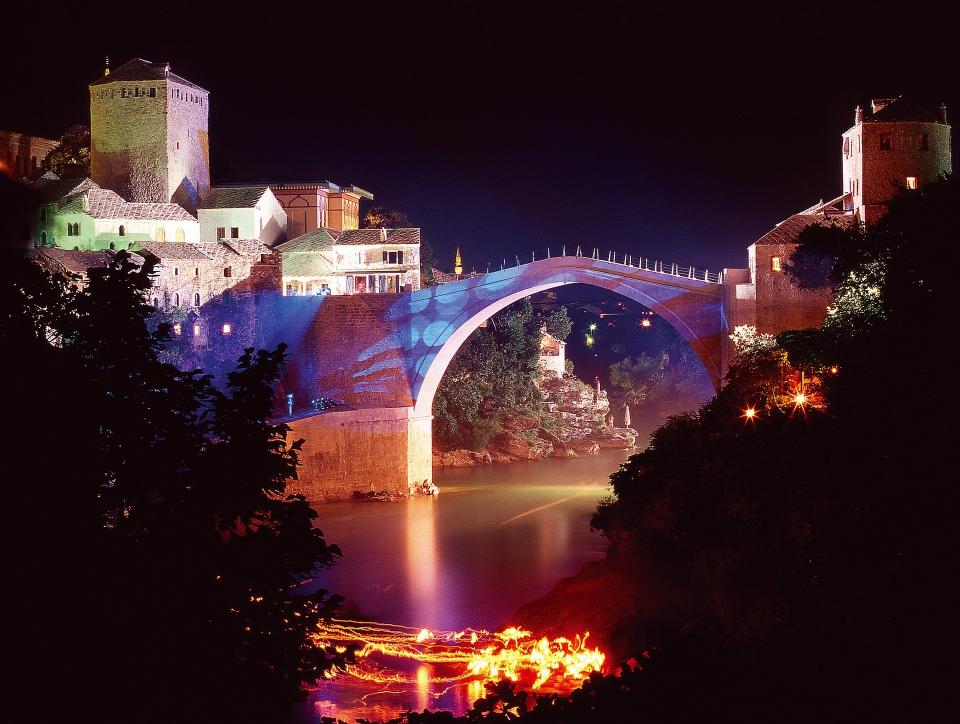
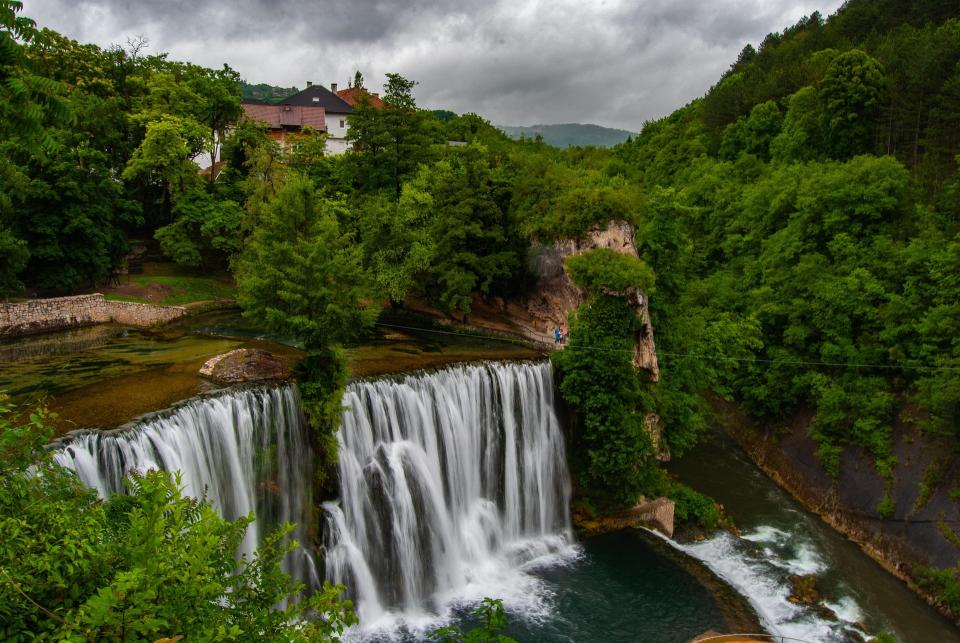
For day trips outside the city, rent a car or join a group tour. Places like Mostar (an hour south), Konjic (an hour east), and the Kravica Waterfalls (two hours south) are worth the time.
Practicalities
Language: Bosnian is the official language. English is spoken by people under 40 in tourist areas, less so elsewhere. Google Translate works. Learning "please" (molim), "thank you" (hvala), and "how much?" (koliko?) goes a long way.
Money: The local currency is the Konvertibilna Marka (KM). About 1.95 KM equals 1 EUR. ATMs are everywhere. Credit cards work in most places but cash is still king in old town.
Visas: Most Western countries get 90 days visa-free. Check officially before you go—visa policies change.
When to go: May-June and September-October are ideal (warm, fewer tourists than July-August). Summer is hot and crowded. Winter is grey and rainy but dramatically fewer tourists and genuinely cheaper.
Safety: Sarajevo is safe. Serious crime is rare. Use normal city sense (don't flash expensive things, avoid empty streets at 3 AM alone), and you'll be fine.
The Reality Check
Sarajevo is not a city without problems. There's corruption, infrastructure needs work, and the political situation is complicated (three ethnic groups, three governments, systems designed to distrust each other by the Dayton Agreement of 1995). These things are real and they're worth knowing about, but they don't define daily life for visitors or residents.
What defines daily life is the absolute refusal of Sarajevo to be simple. It's Ottoman and Austro-Hungarian and Yugoslav and Balkan and European and Islamic and Orthodox and Catholic and Jewish and secular all at once. It's survived plagues, wars, occupations, and ideologies that tried to erase it. It rebuilt itself after 1995.
Come here expecting complexity. Come expecting to be challenged, delighted, frustrated, and moved—sometimes within the same hour. Come expecting real people living real lives, not performers on a stage. Come expecting to spend more time than you planned and to leave wanting to come back.
Come to Sarajevo.
Sources:
City of Sarajevo Official Tourism Board (sarajevo-tourism.ba)
UNESCO World Heritage Site Documentation on Sarajevo
"Sarajevo: A Brief History" - Academic sources from University of Sarajevo
War and Genocide Museum of Bosnia and Herzegovina documentation
Personal observations and local interviews (2024)