
For someone arriving from Western Europe, the first surprise is usually the currency. €1,000 is about 1,956 KM at Bosnia and Herzegovina's fixed exchange rate. That sounds like a lot until rent, heating, groceries and the occasional taxi start taking their share.
A €1,000 monthly budget can still cover a single person's basic life in Sarajevo, but where you live and how often you eat out will decide whether that budget feels comfortable or tight.
So what does €1,000 actually buy in Sarajevo in 2026?
The short answer is: a modest apartment outside the center, groceries, public transport, internet, regular coffees and some nights out. It does not buy a luxury lifestyle, and a centrally located apartment can change the calculation quickly.
Rent is where the budget is won or lost.
Housing is the biggest variable for anyone living alone in Sarajevo.
Current crowdsourced figures from Numbeo put the average monthly rent for a one-bedroom apartment outside the city center at around 552 KM, with reported prices ranging from 450 to 850 KM. In the center, the average is around 814 KM, with a reported range of 650 to 1,140 KM. The figures were updated in August 2026.
That means a person with a €1,000 budget has two very different options.
Take an apartment outside the centre for around 550 KM and you have roughly 1,400 KM left. Choose an apartment around 800 KM in the center and almost half of the monthly budget disappears before you have bought groceries.
For an expat, there is another issue that the averages do not capture: finding the right apartment. Furnished apartments aimed at foreigners can sit at the upper end of the market, particularly in areas close to central Sarajevo.
A sensible €1,000 budget therefore starts with a simple rule: do not spend €400-500 on rent unless you are prepared to cut back elsewhere.
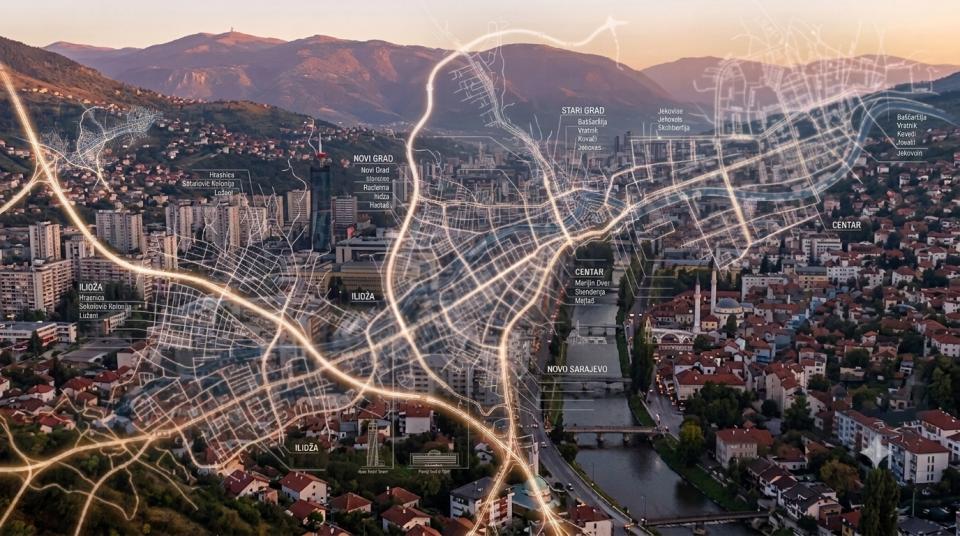
Neighbourhood choice matters. Being a little farther from Baščaršija or the strict city center can make a substantial difference without cutting you off from the city.
Food is still manageable, but the old idea of "everything is cheap" is outdated.
Sarajevo remains relatively affordable for groceries compared with many Western European capitals, but supermarket prices have risen enough that €1,000 should not be planned around restaurant meals every day.
Current Sarajevo price data puts a litre of milk at around 2.23 KM, a dozen eggs at about 5.17 KM, potatoes at 1.58 KM per kilogram and apples at 2.29 KM per kilogram. A basic fast-food meal is listed at around 13 KM, while a basic lunchtime meal with a drink is around 23 KM.
The choice of supermarket also matters. A current comparison of major Sarajevo grocery chains ranks Bingo as the cheapest among the stores included in its August 2026 comparison, with Kort, MEGA Diskont, Mercator, Konzum and Amko following at varying price levels.
For one person who cooks most meals at home, a planning budget of around 300-350 KM per month for groceries is reasonable as a working target, but it is not an official average and will vary with diet.
Meat, imported products, alcohol and prepared food can push that number up quickly.
The easiest way to make €1,000 work is also the most local one: shop normally, cook at home and treat eating out as part of the entertainment budget rather than the grocery budget.
Getting around Sarajevo does not have to be expensive.
Sarajevo's public transport network includes trams, trolleybuses, buses and minibuses, operated by GRAS and other operators in the canton. GRAS currently lists a single ride from 2.20 KM and a daily ticket from 7.10 KM.
That makes it possible to live without a car, depending on your neighbourhood and workplace.
Taxi rides are also relatively accessible by European standards. Numbeo's May 2026 data lists a taxi start at 2.50 KM and an additional 2 KM per kilometre.
For a €1,000 monthly budget, putting aside around 50-70 KM for regular public transport and occasional taxi rides gives you a reasonable starting point.
A car changes the equation completely. Fuel, insurance, maintenance and parking can turn what looks like an affordable monthly budget into a much tighter one.
A realistic €1,000 Sarajevo budget.
Here is one way a single person could structure the month.
Rent: 550 KM,
Utilities: 200 KM,
Groceries: 325 KM,
Transport: 60 KM,
Internet and mobile: 80 KM,
Eating out, coffee and leisure: 300 KM,
Remaining buffer: 440 KM.
That comes to 1,955 KM, almost exactly €1,000 at the fixed exchange rate.
The important part is that this is a scenario, not a claim that everyone can live on these exact amounts.
The rent figure is close to the current Numbeo average for a one-bedroom apartment outside the center.
Utilities can vary dramatically depending on the apartment, heating system, size and season. Numbeo's May 2026 figures put basic utilities for an 85-square-metre apartment at an average of 416.75 KM, while Expatistan's August 2026 data lists 319 KM for utilities for two people in an 85-square-metre apartment. These figures are a useful warning not to assume that heating and electricity will be negligible.
For a smaller one-bedroom apartment, actual monthly costs may be lower, but winter heating can make the difference between a comfortable month and an expensive one.
The 300 KM leisure allowance is where the budget becomes personal. Someone who drinks coffee, cooks at home and goes out once or twice a week can make it work. Someone ordering takeaway several times a week, drinking in bars and taking taxis everywhere will burn through it much faster.
What €1,000 does not get you.
It does not get you the version of Sarajevo advertised through luxury apartment listings and Instagram.
You probably will not want to rent a large, newly renovated apartment in the center, eat at restaurants every evening, use taxis constantly and still save a meaningful amount of money.
It also does not leave much room for unexpected expenses.
A dentist visit, a flight home, a new laptop, winter clothing or a major household purchase can wipe out several months of the apparent savings.
That is why the difference between living on €1,000 and living comfortably on €1,000 matters.
A recent discussion among people considering Sarajevo produced much the same conclusion: €1,000 can work for a single person, particularly with cheaper housing, but becomes tight when central rent and utilities take a large share of the income. These are individual experiences rather than statistical evidence, but they reflect the main variable in the budget: housing.
So, is €1,000 enough?
Yes, if you are single, do not need a car, find reasonably priced housing and are prepared to live like a resident rather than a long-term tourist.
No, if your idea of life in Sarajevo means a central apartment, frequent restaurant meals, taxis, nightlife and regular trips abroad.
The biggest advantage of Sarajevo on this budget is flexibility. You can choose to spend more on housing and less on entertainment, or live farther from the center and have more money left for restaurants, trips and savings.
That is also why the headline number can be misleading.
€1,000 does not automatically mean a cheap life in Sarajevo. It means you have enough room to build a modest one, provided you make the right decisions before signing the lease.