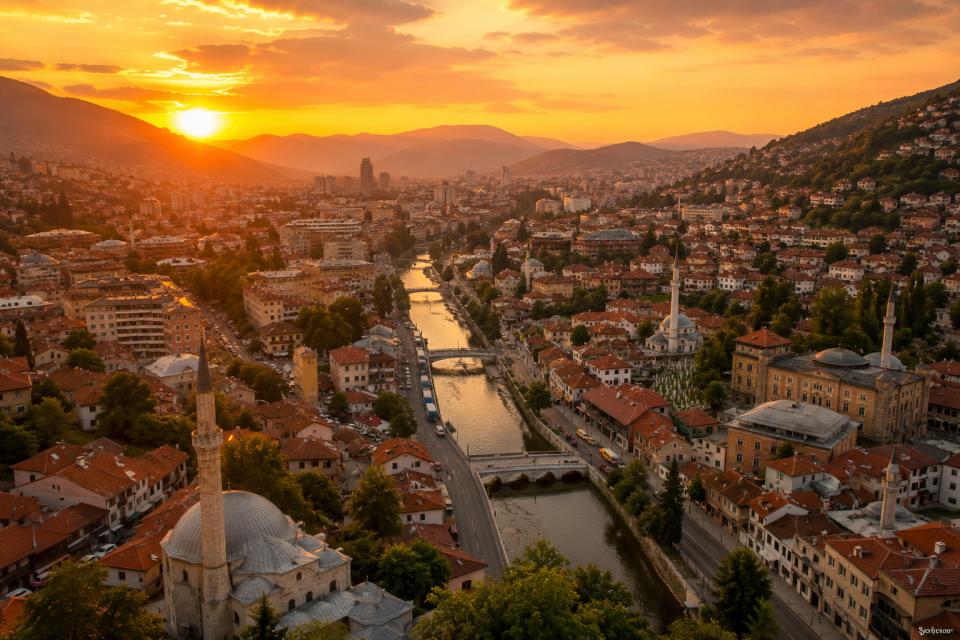

Few cities on earth possess the gravitational pull of Sarajevo. Tucked tightly into a long, narrow valley along the Miljacka River and ringed by the towering Dinaric Alps, Bosnia and Herzegovina's capital is a place where history isn't preserved behind velvet ropes—it is lived on every street corner, echoing from ancient minarets and blending seamlessly with the hum of modern terrace cafes.
For centuries, Sarajevo is known as the Jerusalem of Europe, a rare crossroads where a mosque, a Catholic cathedral, an Orthodox church, and a Sephardic synagogue stood within a single three-minute stroll of one another. It is a city that has survived the rise and fall of empires, ignited the spark of World War I, hosted the world for the 1984 Winter Olympics, and endured the longest siege in modern warfare history. Yet, despite its heavy past, Sarajevo today radiates an infectious warmth, a fierce creative energy, and an unhurried, welcoming spirit that captivates every traveler who sets foot in it.
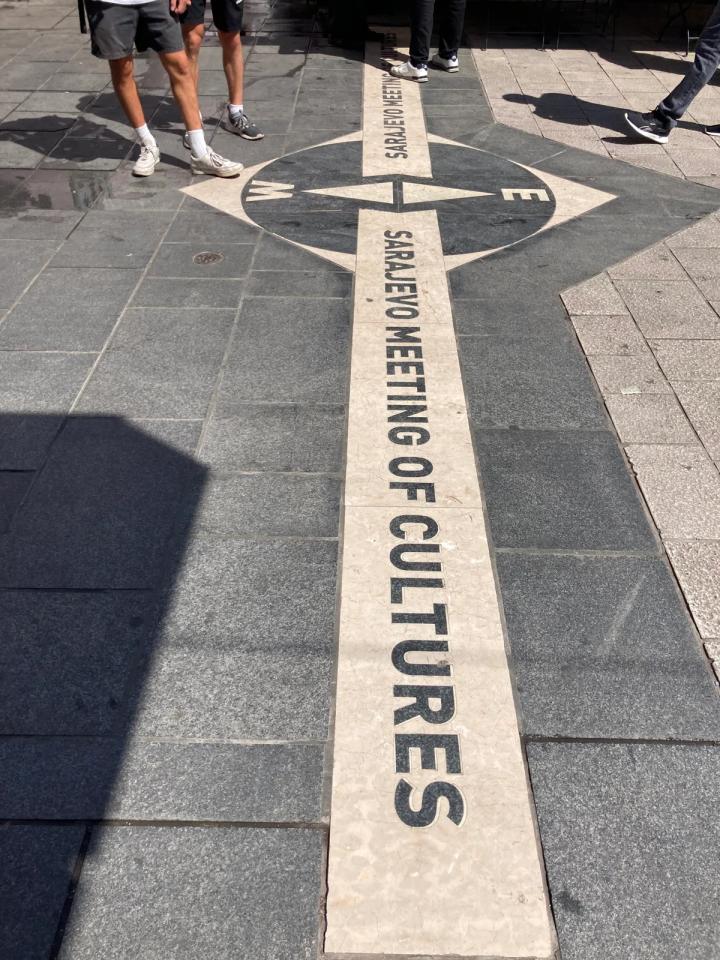
Step just a few paces east of the line, and you are instantly transported into the 15th-century Ottoman realm, surrounded by copper workshops and aromatic teahouses. Step west, and you are immediately enveloped in 19th-century Austro-Hungarian grand architecture, with ornate facades and European-style storefronts.
The beating heart of this eastern quarter is Baščaršija, the old Ottoman bazaar built in the 1460s. This labyrinth of bustling cobblestone alleys is lined with traditional coppersmith shops known as Kujundžiluk, where artisans still hammer intricate designs into copper coffee sets day after day. At the center of it all stands the Sebilj, an iconic, pseudo-Ottoman wooden fountain that has served as the unofficial meeting point for generations of Sarajevans.
Just a short walk away along the river sits Vijećnica, the grandest architectural statement of the Austro-Hungarian era. Built in 1896 in a striking Pseudo-Moorish style, this colorful masterpiece was deliberately shelled and destroyed during the 1990s siege, losing millions of books and documents in the flames. Meticulously restored glass by glass and brick by brick, it reopened as a defiant symbol of the city's cultural resilience. Just steps from the old town stands the Latin Bridge, a modest stone Ottoman structure that marks the precise site where Archduke Franz Ferdinand was assassinated on June 28, 1914—the catastrophic catalyst that altered 20th-century history forever.
Hidden near the international airport lies the Tunnel of Hope, known locally as Tunel Spasa. This hand-dug, 800-meter underground passage running beneath the airport runway was the besieged city's only umbilical cord to the outside world, supplying food, medicine, and electricity while evacuating the wounded. Today, walking through a preserved section of the tunnel offers an unforgettable insight into human perseverance against impossible odds.
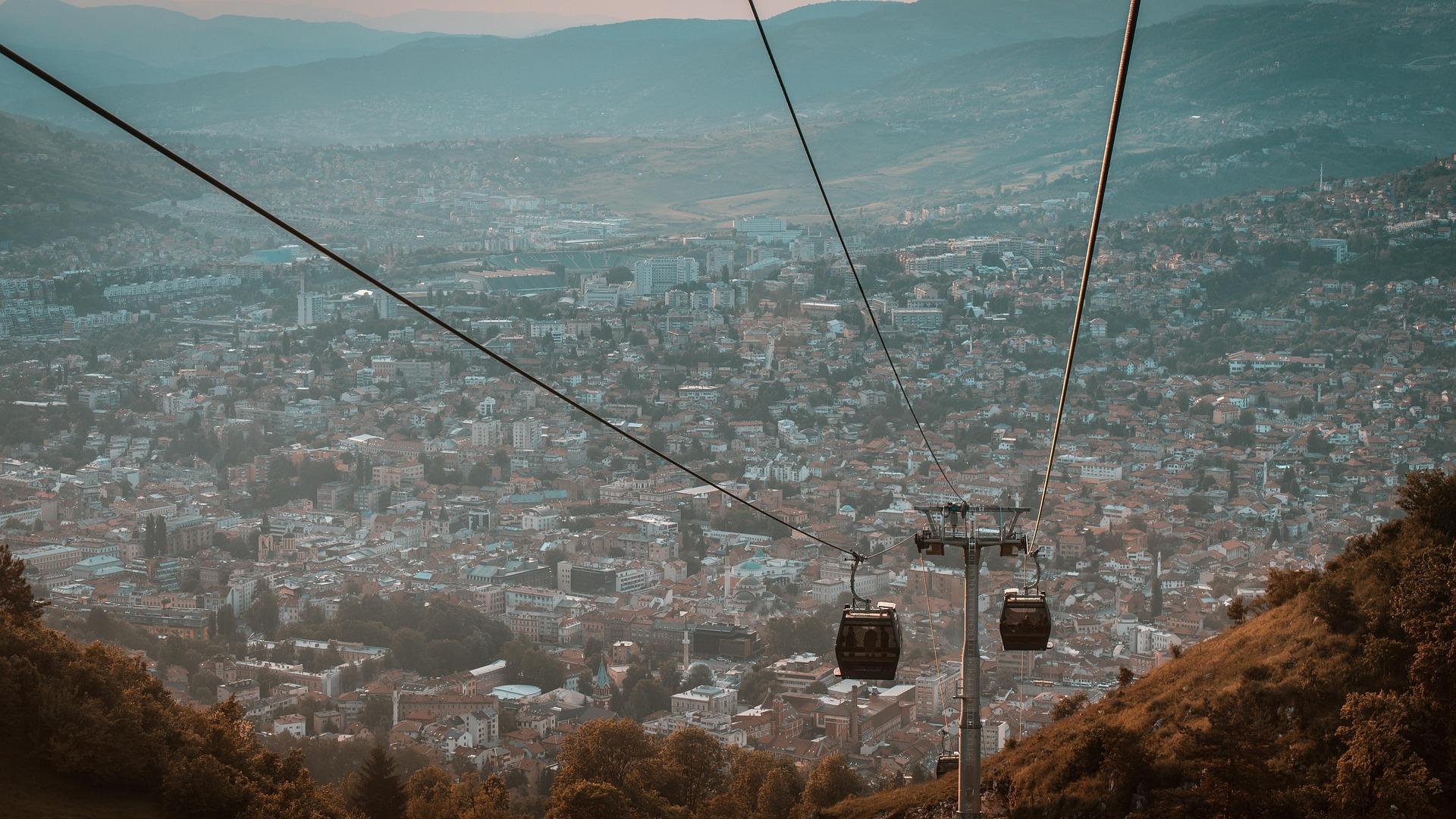
When you need to rise above the urban landscape, make your way up to the Yellow Fortress, or Žuta Tabija, perched high on the hills above Baščaršija. This 18th-century bastion offers the ultimate panorama of Sarajevo's endless sea of red roofs framed by the surrounding mountains. It is the city's favorite spot for watching the sun dip below the horizon as the evening call to prayer echoes harmoniously across the valley. For an even grander perspective, the sleek Trebević Cable Car whisks visitors from the edge of the old town up to Mount Trebević in under ten minutes. At the summit, you can wander through quiet pine forests and stumble upon the overgrown, graffiti-covered ruins of the 1984 Olympic Bobsled Track, a haunting yet beautiful relic of a golden era.
The Culinary Rituals: Coffee, Meat, and Sacred Rules
Take, for instance, the sacred Bosnian coffee ritual. Never call it "Turkish coffee" in front of a local barista unless you want a gentle, smiling correction. Served in a heavy copper pot known as a džezva, accompanied by a small handleless ceramic cup called a fildžan, a cube of sugar, and a piece of rahat lokum, drinking coffee here is about embracing ćef—the uniquely Bosnian art of pressing pause on the day, slowing down entirely, and finding profound pleasure in the present moment.
When it comes to lunch, you must seek out ćevapi, Sarajevo’s undisputed culinary champion. Ten small, grilled minced-beef sausages are tucked tightly inside a warm, pillowy flatbread called somun, served simply with diced raw onions and a generous spoonful of creamy kajmak. Legendary neighborhood institutions like Ćevabdžinica Željo in Baščaršija have spent decades perfecting this seemingly simple dish, drawing queues of hungry patrons every single day.
Equally important is mastering the unyielding local geography of pastry. In Sarajevo, burek is strictly and exclusively filled with minced meat. If you prefer cheese inside your flaky pastry, you must order sirnica; for spinach, zeljanica; and for potato, krompirača. Step into a traditional buregdžinica, like the historic Sač tucked away in the old alleyways, and watch as masters pull massive sheets of dough by hand, baking savory pies beneath heavy iron bells covered in glowing hot coals.
For those planning a journey to this Balkan capital, timing your visit depends entirely on the experience you seek. May through October brings vibrant terrace culture, warm weather, and long evenings spent outdoors, while December through February transforms the surrounding peaks into a winter wonderland for skiing at the nearby Olympic mountains of Jahorina and Bjelašnica.
Recommended stays should ideally span three to four days, giving you ample time to absorb the layered history, hike up to the hillside fortresses, explore the surrounding mountains, and fully surrender to the slow, intoxicating rhythm of café life. Best of all, Sarajevo remains one of Europe’s most affordable and welcoming capital cities, ensuring that your journey leaves a lasting impression on your soul without emptying your wallet.
For centuries, Sarajevo is known as the Jerusalem of Europe, a rare crossroads where a mosque, a Catholic cathedral, an Orthodox church, and a Sephardic synagogue stood within a single three-minute stroll of one another. It is a city that has survived the rise and fall of empires, ignited the spark of World War I, hosted the world for the 1984 Winter Olympics, and endured the longest siege in modern warfare history. Yet, despite its heavy past, Sarajevo today radiates an infectious warmth, a fierce creative energy, and an unhurried, welcoming spirit that captivates every traveler who sets foot in it.
Walking Through Time: Where East Meets West
Sarajevo's physical layout tells the story of its dramatic identity shift across the centuries. As you walk down the lively pedestrian corridor of Ferhadija Street, you encounter a famous brass marker embedded in the pavement bearing the words “Sarajevo – Meeting of Cultures.”Step just a few paces east of the line, and you are instantly transported into the 15th-century Ottoman realm, surrounded by copper workshops and aromatic teahouses. Step west, and you are immediately enveloped in 19th-century Austro-Hungarian grand architecture, with ornate facades and European-style storefronts.
The beating heart of this eastern quarter is Baščaršija, the old Ottoman bazaar built in the 1460s. This labyrinth of bustling cobblestone alleys is lined with traditional coppersmith shops known as Kujundžiluk, where artisans still hammer intricate designs into copper coffee sets day after day. At the center of it all stands the Sebilj, an iconic, pseudo-Ottoman wooden fountain that has served as the unofficial meeting point for generations of Sarajevans.
Just a short walk away along the river sits Vijećnica, the grandest architectural statement of the Austro-Hungarian era. Built in 1896 in a striking Pseudo-Moorish style, this colorful masterpiece was deliberately shelled and destroyed during the 1990s siege, losing millions of books and documents in the flames. Meticulously restored glass by glass and brick by brick, it reopened as a defiant symbol of the city's cultural resilience. Just steps from the old town stands the Latin Bridge, a modest stone Ottoman structure that marks the precise site where Archduke Franz Ferdinand was assassinated on June 28, 1914—the catastrophic catalyst that altered 20th-century history forever.
Resilience and Memory: Understanding the Modern Soul
To truly grasp the soul of Sarajevo, one must understand its recent history. Between 1992 and 1996, the city was surrounded by hostile forces for 1,425 days, enduring relentless shelling and sniper fire. The story of how ordinary citizens survived through sheer ingenuity and solidarity remains deeply humbling.Hidden near the international airport lies the Tunnel of Hope, known locally as Tunel Spasa. This hand-dug, 800-meter underground passage running beneath the airport runway was the besieged city's only umbilical cord to the outside world, supplying food, medicine, and electricity while evacuating the wounded. Today, walking through a preserved section of the tunnel offers an unforgettable insight into human perseverance against impossible odds.
When you need to rise above the urban landscape, make your way up to the Yellow Fortress, or Žuta Tabija, perched high on the hills above Baščaršija. This 18th-century bastion offers the ultimate panorama of Sarajevo's endless sea of red roofs framed by the surrounding mountains. It is the city's favorite spot for watching the sun dip below the horizon as the evening call to prayer echoes harmoniously across the valley. For an even grander perspective, the sleek Trebević Cable Car whisks visitors from the edge of the old town up to Mount Trebević in under ten minutes. At the summit, you can wander through quiet pine forests and stumble upon the overgrown, graffiti-covered ruins of the 1984 Olympic Bobsled Track, a haunting yet beautiful relic of a golden era.
The Culinary Rituals: Coffee, Meat, and Sacred Rules
Food in Sarajevo is never treated as mere sustenance; it is a sacred cultural ritual governed by unwritten rules that locals take very seriously.
Take, for instance, the sacred Bosnian coffee ritual. Never call it "Turkish coffee" in front of a local barista unless you want a gentle, smiling correction. Served in a heavy copper pot known as a džezva, accompanied by a small handleless ceramic cup called a fildžan, a cube of sugar, and a piece of rahat lokum, drinking coffee here is about embracing ćef—the uniquely Bosnian art of pressing pause on the day, slowing down entirely, and finding profound pleasure in the present moment.
When it comes to lunch, you must seek out ćevapi, Sarajevo’s undisputed culinary champion. Ten small, grilled minced-beef sausages are tucked tightly inside a warm, pillowy flatbread called somun, served simply with diced raw onions and a generous spoonful of creamy kajmak. Legendary neighborhood institutions like Ćevabdžinica Željo in Baščaršija have spent decades perfecting this seemingly simple dish, drawing queues of hungry patrons every single day.
Equally important is mastering the unyielding local geography of pastry. In Sarajevo, burek is strictly and exclusively filled with minced meat. If you prefer cheese inside your flaky pastry, you must order sirnica; for spinach, zeljanica; and for potato, krompirača. Step into a traditional buregdžinica, like the historic Sač tucked away in the old alleyways, and watch as masters pull massive sheets of dough by hand, baking savory pies beneath heavy iron bells covered in glowing hot coals.
The Essential Traveler's Notebook
For those planning a journey to this Balkan capital, timing your visit depends entirely on the experience you seek. May through October brings vibrant terrace culture, warm weather, and long evenings spent outdoors, while December through February transforms the surrounding peaks into a winter wonderland for skiing at the nearby Olympic mountains of Jahorina and Bjelašnica.
Recommended stays should ideally span three to four days, giving you ample time to absorb the layered history, hike up to the hillside fortresses, explore the surrounding mountains, and fully surrender to the slow, intoxicating rhythm of café life. Best of all, Sarajevo remains one of Europe’s most affordable and welcoming capital cities, ensuring that your journey leaves a lasting impression on your soul without emptying your wallet.