
This Balkan capital layers centuries of history into every street corner, from Ottoman bazaars to imperial palaces that shaped empires.
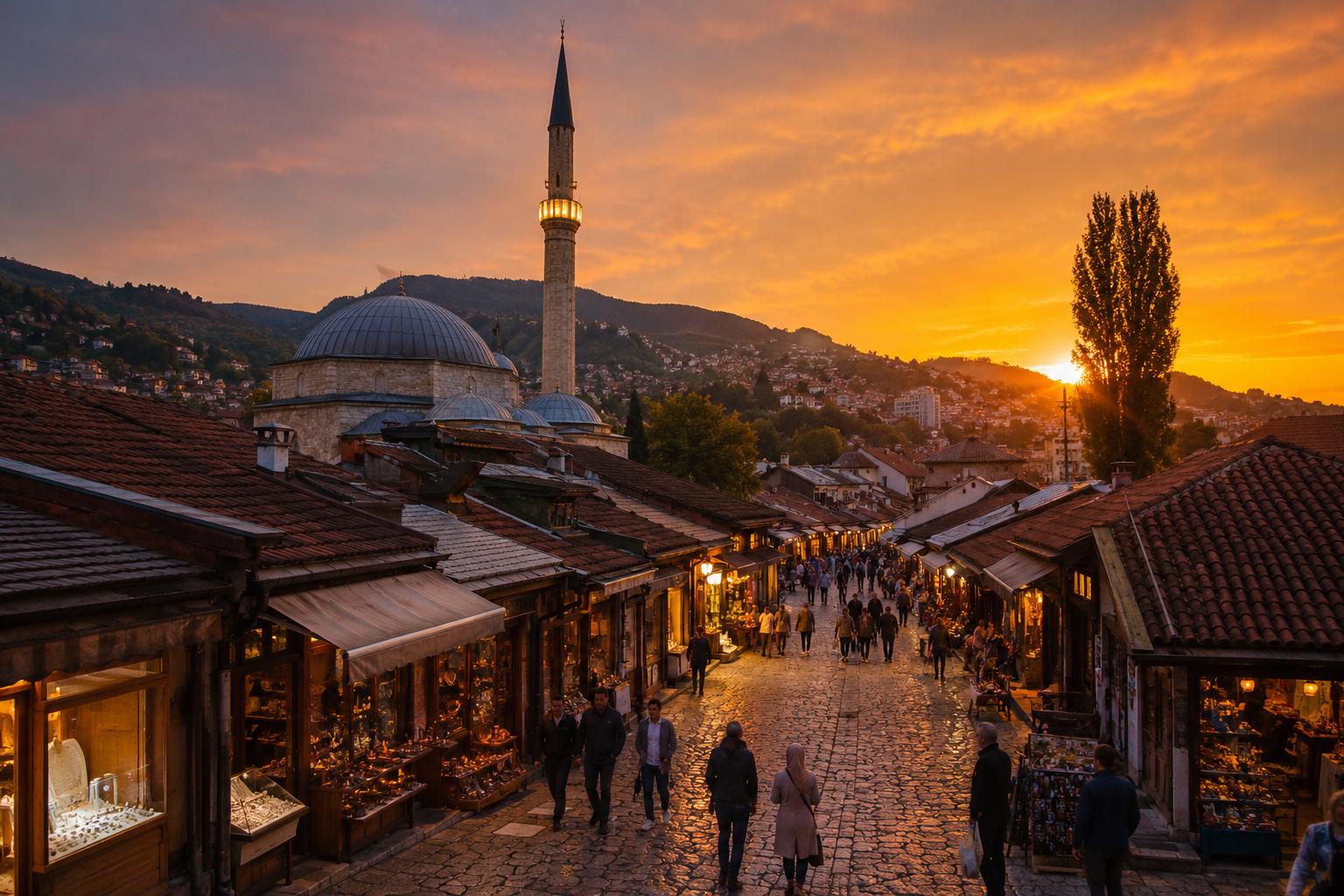
Walk through the Baščaršija—Sarajevo's Old Bazaar—and you're literally stepping through time. The narrow cobblestone streets, the coppersmiths' workshops still hammering away today, the smell of roasted coffee and grilled meat hanging in the air. This isn't a museum exhibit. It's a living, breathing piece of the Ottoman Empire that's been continuously inhabited since 1462.
The thing most visitors miss is that Baščaršija isn't just architecture. It's a functional marketplace where you can still buy handwoven carpets, traditional copper work, and clothes exactly as merchants did 500 years ago. The Sebilj fountain at the center—that's where locals would gather to drink water and share gossip. They still do. The dozens of small mosques tucked into the winding streets, the hammams (Turkish baths), the caravanserais—they all tell a story of how people actually lived when Ottoman rule was at its height.
What strikes most people is the religious diversity compressed into those few blocks. Walking five minutes, you'll pass the Gazi Husrev-beg Mosque (built 1530, still one of the most beautiful Ottoman structures in the Balkans), then the Cathedral of Jesus's Heart, then the Ashkenazi Synagogue. This wasn't accidental planning. This was how Sarajevo functioned—different communities coexisting, trading, marrying, fighting, surviving. During the Ottoman period, Sarajevo was one of the most cosmopolitan cities in Europe.
When Austria-Hungary Redrew the Map
The Austro-Hungarian occupation in 1878 didn't erase Baščaršija. Instead, it created a second Sarajevo right next to it. If you walk up from the bazaar toward the city center, you'll see the shift happen gradually. The wooden Ottoman houses give way to stone Austro-Hungarian buildings with high ceilings and European facades. By the time you reach the Vijećnica (National Library), you're in a completely different architectural world.The Vijećnica is impossible to ignore. This massive neo-Moorish building opened in 1896 as the City Hall and library, and it's arguably the most important structure in modern Sarajevo. The Austro-Hungarians deliberately designed it to blend Ottoman and European aesthetics—showing they could rule respectfully, or at least, that's what the architecture was supposed to communicate. Inside, the reading rooms are vast and ornate, with stained glass windows that fill the space with colored light. During the 1990s war, the building was deliberately shelled and burned. You can still see the scars on the facade. But it's been restored, and it's now a symbol of resilience that's more powerful than any monument.
The broader Austro-Hungarian influence shaped everything you see today. Ferhadija Street runs straight through the center like something out of Vienna. The Catholic Cathedral dominates one side of the city. The Sarajevo City Hall building (not the Vijećnica, but the actual governmental one) looks like it was transplanted from Budapest. The thermal springs at Ilidža became a spa resort during Austro-Hungarian times, complete with grand hotels that still operate today.
What's fascinating is how Sarajevo absorbed both empires without becoming a copy of either. The Austro-Hungarians added European efficiency and grand public spaces, but they didn't demolish Baščaršija. They built around it. Sarajevo remained genuinely cosmopolitan in a way that most other Balkan cities didn't.
The Jewish Quarter and Sarajevo's Sephardic Heritage
Most people don't realize that Sarajevo was one of the major centers of Sephardic Jewish life in Europe from the 15th century onward. After the Spanish Inquisition expelled Spanish Jews in 1492, many came to the Ottoman Empire. Sarajevo became a significant refuge. At its peak in the 1800s, nearly a quarter of Sarajevo's population was Jewish.The Ashkenazi Synagogue still stands in Baščaršija, built in 1902 in Moorish Revival style. Inside, there's a museum dedicated to Sarajevo's Jewish history. You'll see photographs of the Jewish community from the 19th and early 20th centuries—merchants, intellectuals, families integrated into the city's fabric. The museum also documents what happened during WWII and the 1990s war. Sarajevo lost most of its Jewish population in both conflicts.
What's worth visiting though is the Old Sephardic Cemetery, tucked into a hillside neighborhood. Walking through it, you see hundreds of graves spanning centuries, with inscriptions in Hebrew, Spanish-Portuguese (Ladino), and other languages. Many graves are simple stones. Some are ornate. It's a physical record of a community that shaped Sarajevo for centuries.
The remaining Jewish community today is tiny—maybe a few hundred people—but they're rebuilding. The Sarajevo Jewish Museum has become an important cultural institution, not just for Jews but for anyone interested in understanding the city's pluralistic history.
Scars and Memory: The Recent War and Modern Heritage
You can't talk about Sarajevo's history without acknowledging what happened from 1992-1996. The city was besieged for nearly four years. It's the longest siege of a capital city in modern warfare. The war killed roughly 10,000 people in Sarajevo alone.There are reminders everywhere, but Sarajevo has chosen to integrate these reminders rather than hide them. The Roses of Sarajevo—red resin-filled marks on the pavement where shells killed civilians—dot the city. Each one marks where someone died. There are dozens of them scattered throughout downtown. At first, they're jarring. Then you realize how matter-of-fact Sarajevans are about them. They walk past without stopping, but the roses force visitors to think about what happened here.
The National Museum houses exhibits on the war, but also extensive collections on Ottoman and Austro-Hungarian history. The Museum of Sarajevo 1945-1995 focuses specifically on the war years. The Tunnel Museum documents the tunnel that was dug under the airport lines—the lifeline that kept the city supplied during the siege. These aren't glorifying war. They're documenting how people survived.
What's actually remarkable is that Sarajevo rebuilt remarkably quickly. By the late 1990s, the cafes were full again. The Vijećnica was restored. Life returned. Walking through the city today, you see bullet holes in buildings, yes. But you also see vibrant street art, new restaurants, young people rebuilding cultural institutions. The city refused to become a war museum. It remained a functioning city with history layered on top of it.