
In this corner of the Balkans, food is not fuel. It is memory, hospitality, and identity—a culinary tapestry woven from four centuries of Ottoman dominance, decades of Austro-Hungarian refinement, and the rugged, enduring traditions of mountain pastoralists. To sit at a Bosnian table is to participate in an ancient ritual where time slows down, conversations stretch long into the night, and strangers are transformed into family.
The Architecture of the Unhurried Afternoon
To understand Bosnian food culture, one must first understand meza. Far more than a collection of appetizers, meza is a state of mind. It is the art of spreading out a long afternoon over small, thoughtful bites: thin ribbons of air-dried sudžuk sausage, smoked beef prosciutto (suho meso), wild sage honey, and cheeses aged inside sheepskin bags (sir iz mješine) brought down from the high pastures of the Dinaric Alps.There is no rush to clear the plates. The table remains laden for hours as glasses of plum rakija or chilled Žilavka wine are poured. Food is introduced slowly, serving as the rhythmic backdrop to debate, storytelling, and laughter. In a fast-paced world obsessed with quick service and rapid turnarounds, the Bosnian table remains a stubborn, beautiful sanctuary for slow living.
The Guilds of Taste: Aščinice and Buregdžinice
While fine-dining establishments continue to evolve in urban centers, the true soul of Bosnian cooking resides in two historic, working-class institutions: the aščinica and the buregdžinica.An aščinica is a traditional slow-food canteen, a haven of home-style comfort cooking where copper pots simmer over low heat from early morning. Here, the menu is guided by the philosophy of slow roasting and stewing.
You do not order individual quick meals; you order dishes that have taken half a day to reach perfection. There is sogandžolma—tender red onions stuffed with spiced minced meat and rice— alongside hadžijski ćevap, a rich veal stew baked in parchment paper with mushrooms and sweet peppers. Everything is served with a ladle of rich broth and fresh, pillowy somun bread, designed to soak up every last drop of flavor.
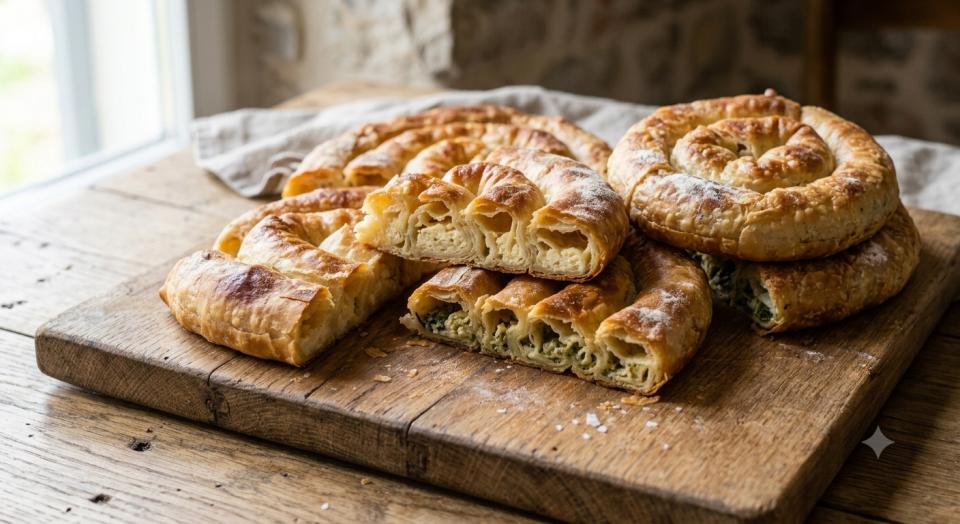
Then there is the buregdžinica, an establishment dedicated entirely to the sacred craft of hand-pulled pastry. Watching a master pastry chef (burekčija) at work is akin to witnessing a performance art piece.
Using only flour, water, salt, and oil, they stretch a ball of dough until it becomes a sheet so translucent you could read a newspaper through it. Filled, rolled into long coils, and baked in large round pans under a heavy iron dome (sač) covered in glowing wood coals, the result is a golden, flaky masterpiece.
And as any local will fiercely remind you: burek is strictly filled with minced meat. Cheese (sirnica), spinach (zeljanica), and potato (krompirača) are honored traditions in their own right, but calling a cheese pie "cheese burek" remains the ultimate culinary faux pas across the country.
Coffee as a Cultural Cornerstone
No discussion of Bosnian food and culture can exist without addressing the ritual that anchors the entire country: bosanska kafa.To the untrained eye, it resembles Turkish coffee, but the preparation method is distinctly local. Whole roasted beans are ground into a fine powder and added to a heated copper pot (džezva) before boiling water is poured over top, creating a dense, velvety foam (kajmak).
Serving coffee is an act of deep intimacy and respect. It arrives on an engraved tin tray accompanied by a small porcelain cup without a handle (fildžan), a glass of cold spring water, sugar cubes, and a square of rose-flavored rahat lokum (Turkish delight).
You do not gulp this coffee on your way to work. You take a sugar cube, dip its edge lightly into the hot coffee, bite off a tiny corner, and sip slowly. This process is the ultimate expression of ćef—doing something purely for the intrinsic pleasure and peace it brings.
In Bosnia, asking someone "to drink coffee" (hajde na kafu) is rarely about caffeine; it is an invitation to connect, to listen, and to share a slice of human experience.
The Lasting Impression
In an era where globalization often flattens regional distinctions, Bosnia and Herzegovina's food culture remains fiercely authentic because it is rooted in generosity rather than commercialism.
Whether you are dining in a centuries-old courtyard in Mostar, a historic aščinica in Sarajevo, or a quiet mountain village home, the message at the dinner table remains unchanged: sit down, leave your worries at the door, and let us feed your soul.