
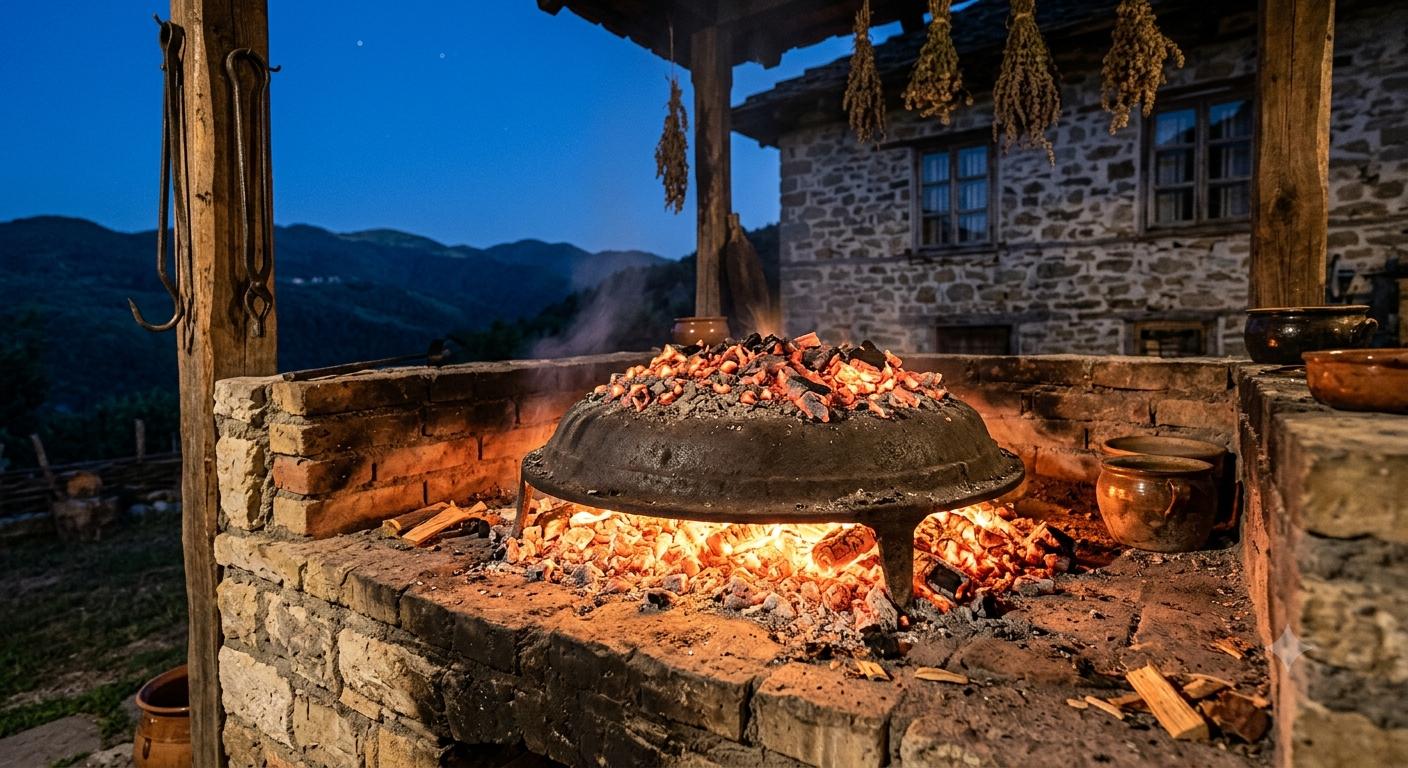
High in the emerald valleys of the Dinaric Alps, before the morning mist clears from the limestone peaks, smoke begins to rise from the chimney of a traditional stone house. Inside, an elder woman named Sevda kneels beside a heavy cast-iron bell, known locally as a sač or peka. She carefully arranges glowing embers of oak wood onto its domed lid, sealing in the moisture of freshly rolled dough, wild mountain herbs, and slow-roasted meats. This scene plays out across rural villages throughout Bosnia and Herzegovina every single day, preserving a living culinary heritage that no formal culinary academy could ever replicate.
While fine-dining establishments in regional capitals draw tourists with modern interpretations of Balkan classics, the true keepers of Balkan gastronomy remain the mothers and grandmothers cooking in village kitchens.
The Sacred Art of the Rolling Pin: Pite and Hand-Crafted Doughs
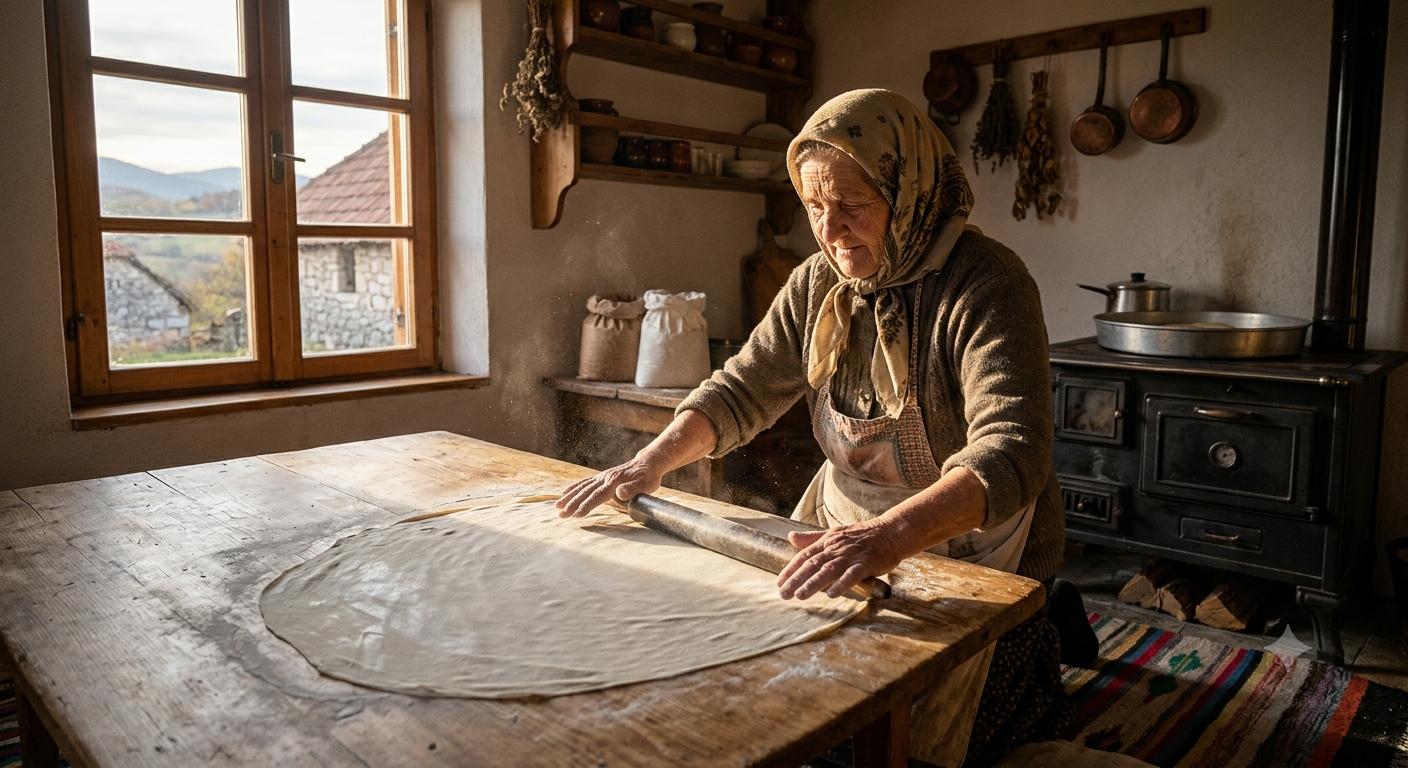
To understand the soul of Balkan cuisine, one must first master the delicate rhythm of making traditional pita. Far from the mass-produced phyllo pastry sold in modern supermarkets, authentic Balkan pies require an extraordinary level of skill, patience, and muscle memory passed down through mother-daughter lines. The dough, made simply from flour, water, salt, and a dash of oil, is stretched by hand over large cloth-covered tables until it becomes almost paper-thin and translucent.
Women in rural communities learn this technique from an early age, developing a tactile feel for the elasticity of the dough that no written recipe can convey. Whether preparing a savory krompiruša filled with hand-cubed potatoes and cracked black pepper or a rich sirnica loaded with fresh unpasteurized cottage cheese, these women transform humble staples into masterpieces of texture and flavor. The precise technique of rolling, oiling, and baking these long spiral pastries ensures that every bite carries the perfect ratio of crisp outer crust and soft, flavorful filling.
Preserving the Seasons: The Autumn Ritual of Ajvar and Winter Stores
As summer turns to crisp mountain autumn, village life across the region revolves around the laborious preparation of winter provisions, known collectively as zimnica. The undeniable crown jewel of this seasonal harvest is ajvar, a rich roasted red pepper relish made exclusively during the short window when local horn peppers reach peak sweetness. The production of authentic ajvar is an intensive communal effort that spans several days and brings together multiple generations of village women around open outdoor hearths.
The process begins with roasting hundreds of red peppers over hardwood fires until their skins are charred and blistered. The women then sit together for hours, peeling away the scorched skins, removing every seed by hand, and hanging the sweet pepper flesh in canvas sacks to drain overnight. The following day, the peppers are ground and slowly simmered in large copper cauldrons over low heat for hours, constantly stirred with long wooden paddles to prevent scorching until the mixture reaches a velvety, spreadable consistency.
Heritage Beyond the Recipe: Food as the Living Fabric of Community
In the rural Balkans, food has never been merely a source of physical nourishment; it serves as a profound social currency and a primary language of hospitality. The women who manage these village kitchens hold an elevated position of social stewardship, ensuring that seasonal festivals, weddings, and family gatherings are anchored by authentic food traditions. Every preserved jar of wild plum jam, every wheel of aged mountain cheese wrapped in sheepskins, and every cured sausage hanging in the smokehouse represents an unbroken chain of regional identity.
As younger generations migrate toward urban centers, these village women are stepping into new roles as cultural preservationists and eco-tourism leaders. Many rural households now welcome international travelers and digital nomads into their homes for private cooking classes and farm-to-table meals, offering visitors an unvarnished taste of authentic Balkan life. Through these immersive cultural exchanges, the unsung heroines of regional gastronomy are proving that the true heart of Western Balkan culture is best experienced right at the kitchen table.
Sources:
Information compiled from field reporting, regional folklore archives, and traditional culinary research published on BalkanInsider.net.