
You have your residency permit, a flat in a neighborhood you mostly understand, and a few favorite cafes where the staff knows your order. On paper, you are integrated. But after six months, you realize your social circle is a mirrored reflection of yourself: other expats, digital nomads, and the occasional friendly local who treats you with the kindness of a permanent guest.
In Bosnia, hospitality is a national sport. You will be invited for coffee, offered a ride, and fed until you can barely move. However, there is a distinct difference between the Bosnian hospitality extended to a foreigner and the intimacy shared between friends. The former is a duty; the latter is a sanctuary.
Moving from the "honored guest" category into the inner circle requires understanding a social code that is rarely written down and often contradictory.
The coffee invitation paradox.
For any newcomer, the phrase "Let's have a coffee" is the first point of confusion. In many Western cultures, this is a concrete appointment with a time and a place. In Bosnia, it is often a social lubricant, a way of expressing general goodwill without committing to a calendar entry.When a local says, "We must have coffee soon," they are usually telling you that they like you. They are not necessarily asking you to check your availability for Tuesday at 4 PM. If you try to pin them down with a Google Calendar invite, you might actually create friction. The ritual is about the absence of pressure. It is about the time that is spent, not the time that is scheduled.
To move past this paradox, you must be the one to initiate, but do so with flexibility. Instead of a formal invitation, try the "I am going to be at Cafe X on Thursday afternoon if you want to drop by" approach. This lowers the stakes and fits the local rhythm.
Breaking the polite barrier.
The biggest obstacle to genuine friendship in Bosnia is the "hospitality trap." Locals are so conditioned to be welcoming to foreigners that they often subconsciously protect you from the messy, honest parts of their lives. They will tell you the city is wonderful and the people are kind, even when they are complaining about the government or their neighbors to their own siblings.As long as you are the "guest," the conversation stays on the surface. You are the curious foreigner, and they are the helpful hosts. To break this, you have to stop being a guest. This happens when you stop asking for recommendations and start sharing your own frustrations, failures, and unfiltered opinions.
Vulnerability is the currency of Bosnian friendship. When you admit you are struggling with visas and documents or that you feel lonely in a new city, you give the other person permission to stop being a host. This is when the conversation shifts from "What do you think of Sarajevo?" to "Can you believe what happened at the office today?".
The role of shared struggle.
Friendships in the Balkans are often forged in the fires of shared difficulty. Whether it is navigating a broken heating system in January or arguing about the merits of a specific football club, conflict and resolution are key to bonding.
If you are too polite, too agreeable, or too "corporate" in your interactions, you remain a distant figure. Bosnians value authenticity over etiquette. A heated debate over dinner is not a sign of a failing friendship; it is often a sign that you are finally being trusted enough to disagree.
This is also why food is so central. The table is where the masks come off. If you are invited to a home for a meal, do not just bring a bottle of wine. Bring something specific and thoughtful, and be prepared for the meal to last four hours. The food is the excuse; the conversation is the point.
Finding the right entry points.
While you can find friends anywhere, some environments accelerate the process more than others.
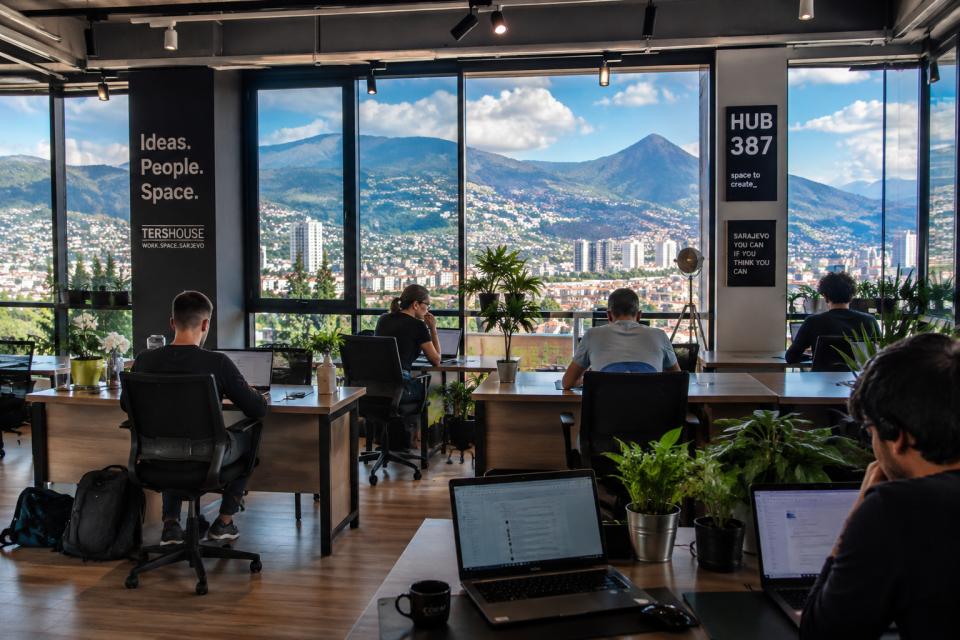
The "expat bubble" is comfortable, but it is a gilded cage. If you spend all your time at coworking spaces or English-speaking meetups, you are essentially living in a filtered version of the country. To integrate, you need "third places" where English is not the primary language.
Join a local gym, take a pottery class, or start learning the language. Even a basic grasp of the local tongue signals that you are not just passing through. It shows a commitment to the place that transcends the typical nomad experience.
Depending on where you live, the social energy differs. Those in Sarajevo or Mostar might find the social scenes more fragmented and intense, whereas smaller towns often have a more direct, albeit slower, path to integration.
The goal is not to replace your expat friends, but to build a bridge. The moment you realize you are no longer being "taken care of" and are instead being asked for a favor, or being teased relentlessly for a mistake you made, is the moment you have actually arrived.