
Type "Bosnia D visa digital nomad" into Google and you'll get a wall of contradictory blog posts. Here's the short version: Bosnia and Herzegovina has no dedicated digital nomad visa. None. What people are calling the "D visa" is a real document, but it has nothing to do with remote work.
Meanwhile, an hour and a half up the coast, Croatia runs one of the more established digital nomad programs in Europe, with a real income threshold, a real application process, and a tax exemption that actually means something. If you're a remote worker weighing Sarajevo against Split, or a Bosnian planning to base yourself in EU territory, the two systems could not be more different.
What Bosnia's "D visa" actually is
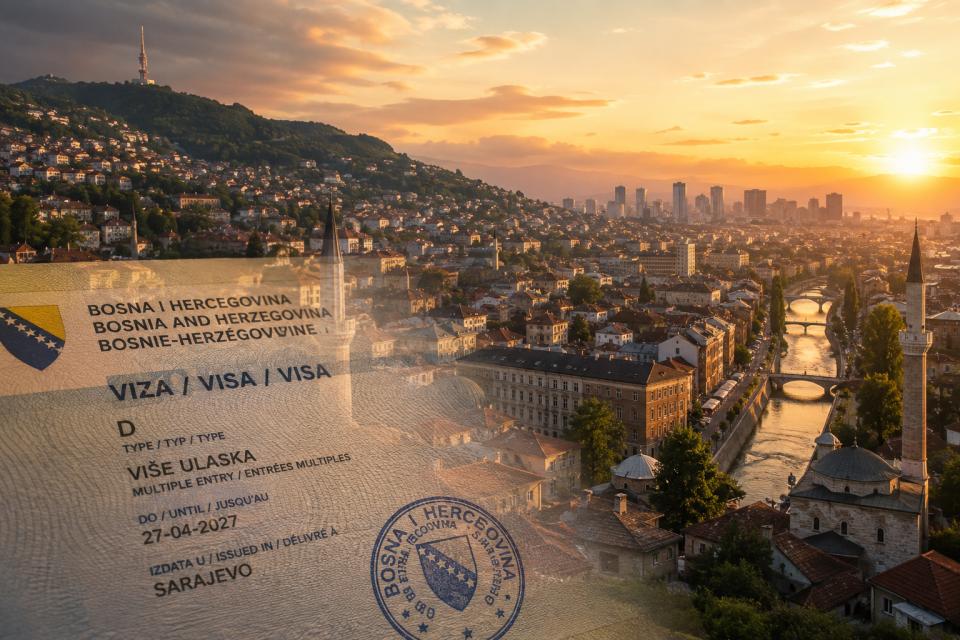
Under Bosnia's Law on Movement and Stay of Aliens and Asylum, Visa D is a long-stay national visa, issued when someone needs to be in the country longer than the standard 90-day tourist allowance, for reasons like education, professional training, or specific tourism purposes. It requires prior approval from the Service for Foreigners' Affairs (Služba za poslove sa strancima, SPS), and applications are processed within roughly 30 days once the paperwork is complete. On a D visa, a foreigner can reside in BiH for up to 180 days total within a year, according to the Lexology immigration guide referencing the Foreigners' Act.
There is no "remote work" or "digital nomad" category anywhere in that list. If you're working online for a company outside Bosnia, the D visa doesn't apply to you and doesn't help you.
How people are actually staying long-term here
Since there's no nomad-specific route, most foreigners who want to live in Sarajevo or Mostar longer than 90 days go through one of two doors: a temporary residence permit, or a tourist stamp they quietly stretch past its intended purpose.
The temporary residence permit is issued through SPS for specific grounds: employment with a work permit, business ownership, family reunification, property ownership, or education. For remote workers, the practical path is registering a local company (a d.o.o.), which requires a minimum share capital of around EUR 500, and using that business registration as grounds for residence. The initial permit typically runs for one year and is renewable as long as the business stays active.
Sources disagree on exactly how many consecutive years of temporary residence lead to permanent residence, some say three, others cite five, so confirm the current threshold directly with SPS before you plan around it.
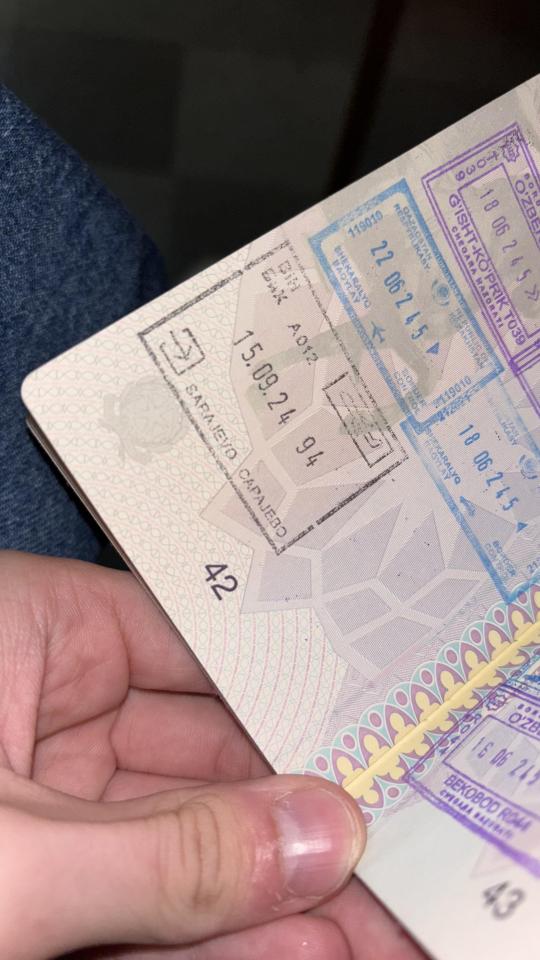
The other route, and the one most nomads actually use in Sarajevo's cafes right now, is simply working on a tourist stamp. It's not legal in the strict sense: tourist entry is for tourism, not remote employment, even if the employer and clients are outside the country. Enforcement is inconsistent and larger cities see few checks, but the risk resurfaces the moment you interact with immigration for a visa renewal or run into any kind of trouble. As of September 2026, this remains a genuine grey area rather than a sanctioned workaround.
Croatia's real digital nomad visa, and what it costs
Croatia's Digital Nomad Residence Permit (Boravak digitalnih nomada) is an actual government program, introduced in 2021 and reshaped by an amended Aliens Act that took effect on 15 March 2025. It's built for non-EU/EEA citizens working remotely for employers or clients based outside Croatia, which, worth noting for anyone in Sarajevo, includes Bosnian citizens, since BiH isn't in the EU.
As of the March 2026 update, the minimum income requirement is €3,622.50 per month, or savings of roughly €43,470 to cover 12 months and €65,205 to cover the full 18-month stay. Applicants need six months of bank statements or payslips to prove it. The permit now allows up to 18 months in a single grant, up from the old 12-month-plus-extension structure, but the cap is firm: once it expires, you have to leave and wait six months before reapplying. It's a genuinely attractive package because holders are fully exempt from Croatian income tax on their foreign-sourced income, and Croatia's Schengen membership since January 2023 means the permit also opens up freedom of movement within the zone.
EU and EEA citizens don't need any of this. They can live and work in Croatia freely under EU free movement rules and just need to register their stay if it runs past 90 days.
Bosnia vs. Croatia: the practical trade-off
The comparison isn't really "which visa is better," because Bosnia isn't offering a comparable product. It's "do you want a country with zero official recognition of remote work but low cost of living and minimal enforcement, or a country with a real legal framework, a real income bar to clear, and a tax break attached to it."
For someone testing the waters, working from a rented apartment in Sarajevo on a tourist stamp costs nothing extra and works fine until it doesn't. For someone who wants a document that actually says "digital nomad" on it, who earns well above the Croatian threshold, and who wants the tax exemption, Croatia is the only one of the two actually built for that purpose. As an EU candidate country, Bosnia's rules may move toward EU standards over time, but there's no confirmed timeline for a dedicated nomad visa as of now.